
Home Blog Page 255

Trades Rock NBA as Mavs get Kristaps Porzingis

0
Image courtesy of USA Today Sports

Well, that was fast! Thursday morning, Kristaps Porzingis let the Knicks’ brass know he was frustrated with the direction of the team and by Thursday afternoon, he was a Knick no more. New York will bring back Dennis Smith Jr. and clear a bunch of salary in the deal by receiving the expiring contracts of DeAndre Jordan and Wesley Matthews, while sending Tim Hardaway Jr. and Courtney Lee to the Mavericks. The Knicks also get two, future, first-round picks from the Mavericks. Two years ago, the Knicks passed on Dennis Smith Jr.

The Mavericks look at Porzingis as the new Dirk as thy have similar skill sets. Porzingis has career averages of 17.8 points and 7.1 rebounds. The Mavs have given Luka Dončić a co-star to build around for the next decade. For the Knicks, it’s about creating cap room to chase two, maximum-salary, free agents this summer. The Knicks have close ties to Kevin Durant and Kyrie Irving as future Knicks. Severing the relationships with Porzingis was a must with a player who reportedly has been dissatisfied with the direction of the organization. He also would’ve turned free agents away with his attitude toward the team.

This is a huge gamble for the Mavs as Porzingis has been out for a year with an ACL injury. The Mavericks are currently 23-27, 12th in the Western Conference. As loaded as the West is, there’s almost no chance they’ll make the playoffs. Even if Porzingis returns this season, he and Dončić could be a dangerous tandem, but that’ll have to wait until next season. The West has been put on notice the Mavs look to return to the top of the mountain. This is the first piece of the NBA trade puzzle as Feb. 7 is approaching soon. Let the NBA trading war begin!

The GOAT or the Sack Machine?

0
Image courtesy of USA Today

The Super Bowl’s nearly upon us. This is the game where stars are born and legacies are cemented. There’s Hall of Fame talent on both teams. Looking at both, the Rams look to have overall better talent while the Patriots, per usual, have the better scheme to beat anyone. In this match-up, will it be New England’s theme schemes or the talent and explosiveness of the Rams that’ll prevail? Or, maybe it will come down to the Sack Machine or the GOAT.

Los Angeles Rams

The player who will decide the game for the Rams is Aaron Donald, who might be the best defensive player of his generation. There have been a few interior defensive tackles who are pass-rushers, but Donald is dominant. He led the league with 20.5 sacks. His run support, while second to his pass rush ability, is still in the upper echelon of the league. Additionally, he can stop the run and pressure Brady and can do more to help deliver Los Angeles a victory than anyone.

“He’s pretty much unblockable,” Patriots head coach Bill Belichick said.

Donald will likely be named Defensive Player of the Year for the second, straight season. If the Rams win the big one, he could be one of the few defenders to be named Super Bowl MVP. He’s the most unstoppable force in Super Bowl LIII, and even if his numbers don’t show it, he’ll get double and triple-teamed to allow others to make plays.

New England Patriots

One of the most hated men in football outside of Boston is quarterback Tom Brady. Ironically, he might just be the best player at his position in NFL history. There’s no doubt who will make the biggest impact to win the game for New England. Brady’s about to play in his ninth Super Bowl. He’s played half his professional career in February. The Patriots have leaned heavily on the run lately, but if the game comes down to Brady, we’ve seen this movie before.

While there are big names on the Rams defense, they didn’t play well as a unit ranking 19th with 358.6 yards allowed-per-game in the regular season. There simply isn’t a quarterback you’d rather have in a postseason game. Brady may have started to lose a step or two, but he’s undoubtedly one of the best to ever play the game. Rest assured he’ll shoulder the load for New England, but this is nothing new.


Brow Watch: Where will Anthony Davis go?

0
Image courtesy of USA TODAY Sports

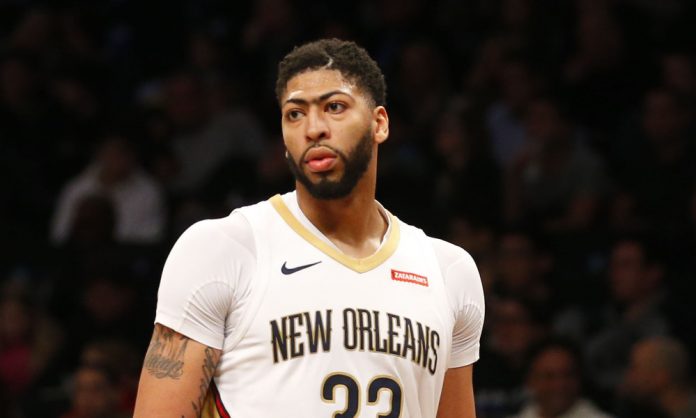
The NBA trade season is officially here and we’re now on The Brow watch. Speculation surrounding Anthony Davis’ future with the New Orleans Pelicans has been rumored all year.

Now, the clock has started ticking toward the Feb. 7th trade deadline. Davis’ agent, Rich Paul, has informed the Pelicans his client has no intention of signing a contract extension with them this summer and “wants to be traded to a team that allows him a chance to win consistently and compete for a championship.”

AD has been connected to the Lakers since LeBron James signed. A lot of shine has faded from Los Angeles’ top prospects as they haven’t raised their game while James has been out with injury. Kyle Kuzma has played the most consistent basketball of the bunch. Kuzma has shown flashes of a future All-Star.

The Lakers last option is to include Kuzma. Adding Brandon Ingram beefs up the deal. While he has had an up and down season, many have compared him to KD. Next would be a decision between Josh Hart and Lonzo Ball. Maybe even a first round pick.  The selection would be toward the bottom of the round if the Lakers have Davis and LeBron James under their belt.

The Lakers can play hardball, citing what Davis’ 2019-20 salary does to their offseason flexibility. Good luck getting the Pelicans to care! While everyone has been coming up with trade scenarios, the NBA has launched an investigation. “We commenced an investigation this morning upon reading the reports regarding Anthony Davis,” NBA spokesman Mike Bass said.

Ever since AD signed with Klutch Sports Group where LeBron is signed, the writing has been on the wall for some time. The Pelicans reached the playoffs twice in Davis’ first seven years, and they’re on pace to miss the postseason this season. Any team with LeBron James has a deep run into the playoffs on their mind. So now, we play the waiting game.

Gambling – Is it All About The Money?

Photo Courtesy of the Associated Press

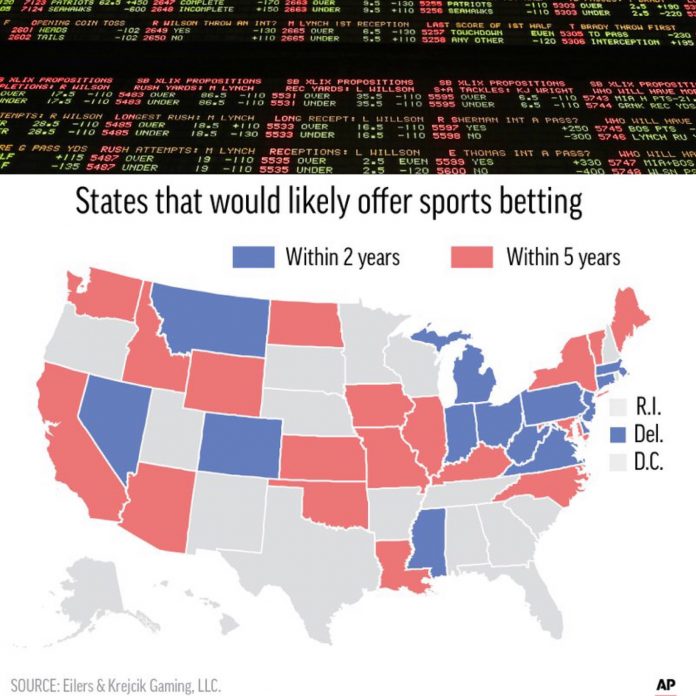
“Show me the money!” said actors Tom Cruise and Cuba Gooding Jr. in the iconic film Jerry Maguire.  Like Cruise trying to convince client and wide receiver Rod Tidwell (played by Gooding Jr.) about seeing beyond the money, is gambling all about how much money is made?  Or should we as a society also consider social responsibility when it comes to gambling?  

Here are the three things that could go wrong with the normalization and standardization of state-sponsored gambling across these United States of America:

1. The Four “I’s” of Gambling: Integrity, Impropriety, Investigation, and Incarceration 

Pete Rose and the MLB Hall of Fame.  The Chicago Black Sox and the 1919 World Series.  Michael Jordan, the NBA, and minor league baseball.  Examples of gambling and sports gone wrong and why professional sports leagues resisted gambling for such a long time.  The normalization of gambling as a game in sports is both a blessing and a curse.  A blessing because it adds tax dollars and other revenues to the coffers, both to state and private entities, while simultaneously reducing the dreaded black market for gambling.  Gambling is also a curse because it offends the traditional dividing line between gambling and sports.  It becomes less and less likely that one can claim that their integrity and lack of an appearance of impropriety is intact where the leagues are collecting sponsorship dollars and engaging in partnership relationships with gambling houses. 

State-sanctioned gambling also increases the likelihood of investigation by private and state entities alike with possible fines and incarceration as a result where violations have occurred.  

2. Issues of Game and Sport 

Gambling is in some sense a novelty.  It was only allowed in three states prior to the Murphy decision by the Supreme Court in 2018.  It was something people did in Las Vegas for fun, where the serious gambler made a career out of it, or something on the black market.  While losing life and limb for gambling debts is something we mostly see in the movies, the vision for sports leagues, teams, and third-party vendors is to engage more people in their broadcast content by having people, fans or not, holding a stake in the outcome beyond personal favorites.  It is like the funny GIF that shows the young boy being asked by his father how do you bet the Patriots to win the Super Bowl, but root for the Rams to win.  When people put money down, they tend to care more about outcomes and that increases viewership and spending.  Gambling was traditionally viewed as a game, while sports is a profession with unions and television contracts.  That line has been blurred by the modern gambling-sports relationship that was helped by the U.S. Supreme Court as well as prior sponsorship deals with fantasy sports companies (who have become the gambling centers), broadcasting, and streaming of gambling tournaments.

3. Personal Debt & Responsibility

Money aside, debt and personal responsibility is and will be a major issue in America in general and especially when it comes with increased access to gambling.  How can regulators, leagues, and legislators moderate good behavior?  Can they legislate good behavior, good decision-making, and investments?  A concern going forward is what effect the normalization and standardization of gambling in sport will have on fans, participants, the athletes, coaches, and the leagues.  During ancient Greek and Roman times, laurel leaves were all the rage.  The leaves were considered medicinal, hard to get, and a hallucinogenic.  The government banned them from public consumption.  No one cares about laurel leaves now.  Normalization and standardization does that to things and ideas about things.  However, the problem here is that increased access to gambling may indeed have actual consequences. 

Whether you are an avid gambler or not, we as a society need to monitor its effects on the individual and the masses. 

Three Keys to Content Distribution Today

Photo Courtesy of the Associated Press

With the New York Yankees and Chicago Cubs considering developing their own or purchasing a larger ownership stake in a broadcast network, what should professional sports franchises look for when negotiating and launching a new product for consumers? 

Here are the three things negotiators and developers should look for in constructing a deal. 

1. Distribution Partner(s)

A distribution partner is a marriage of brands, content, and financing.  If one aspect of the deal goes wrong, the entire production could be compromised.  As an example, the Los Angeles Dodgers have struggled to distribute their broadcasts to its fans because their distribution partner (Spectrum) had a tough time licensing its rights to other platforms and distributors.  The deal has struggled to distribute because it was based on non-contractual parties distributing content.  Where a non-contractual party has the leverage to hurt a competitor, it is likely to do so and competitors indeed done just that with the Dodgers/Spectrum. 

It should come as no surprise that professional sports teams like the Yankees and Cubs have sought to avoid relying on distributors that are not parties to its own contract(s) or becoming a distributor themselves.  Therefore, finding the right distribution partner is all the more important to reaching viewers. 

2. Innovative Capabilities

Streaming is a part of everyday life now.  However, traditional television is still popular in many homes.  Internet television, mobile viewing, and social media are also likely distribution partners today.

Camera view angels, audience engagement, augmented and virtual reality and graphics, and future capabilities not yet discovered or used can help build or harm a distribution deal.  Often the copyright owners, creators, and professional sports teams want to hold more rights so that it can sell to more buyers (distributors).  However, where the copyright owner controls/owns the distribution network, it can be innovative in its changing course while still controlling its product.

3. Content Control   

If a copyright owner also controls/owns distribution, it can choose its commentators, production partners, and how/where the content is delivered.   No wonder the Yankees, Cubs, Endeavor, and other content providers are more clearly pursuing distribution control as they are content creation and control.  More responsibility comes with more control, but with the availability of non-traditional distribution (streaming, social media, etc.), content has become easier to distribute so owners/creators have become more willing forgo traditional partners for more control. 

“You’re hired!” SRA’s review of new NFL coaches

0
Freddie Kitchens image courtesy of USAToday

With football season well underway, here’s our review of this year’s roster of new NFL coaches.

Freddie Kitchens, Cleveland Browns

The Browns have a bright future, a young roster and cap moves to be made. They have their franchise quarterback, a breakout running back and a young defense. The only downside to this job? Heightened expectations. The good news for Kitchens is he starts with a clean slate. The head coach and coordinators who started this season for the Browns are gone. Kitchens will surely get some time as head coach.

Bruce Arians, Tampa Bay Buccaneers

Arians is a very good coach with a huge personality and is the right choice to whip Tampa Bay and Jameis Winston into shape. The Bucs needed an adult in the room and they’ll finally get one. Hiring a young upstart head coach wasn’t going to fit what the Bucs were looking for. The team went out and made an offer good enough to pull Arians out of the announcers’ booth and back onto the field.

Kliff Kingsbury, Arizona Cardinals

Kingsbury needs a veteran defensive coordinator because his defenses at Texas Tech were terrible. He should also find someone who has a bit of NFL head coaching experience to help him out. The college and professional games are different. We have to mention by law Kingsbury went 35-40 as Texas Tech.

Vic Fangio, Denver Broncos

The Broncos need a QB. Since they aren’t set up for immediate success, that means Fangio is immediately on the chopping block. Elway has been putting his bad roster decision at the feet of his coaches for some time now. He’s already gone through four coaches and Fangio is the fifth during his tenure.

Green Bay Packers, Matt LaFleur

Green Bay turned to a Great Lakes native to replace Mike McCarthy, snagging former Saginaw Valley State quarterback LaFleur after one underwhelming season as the Titans’ offensive coordinator. He didn’t do much for a Tennessee club, who scored fewer points and won fewer total games with him in the fold than it did in 2017.

Miami Dolphins, Brian Flores

Flores spent his entire coaching career in New England, starting in 2004 as a scouting assistant and moving up to the club’s linebackers coach. The former Boston College linebacker has played a key role in elevating talented players in Foxborough, turning unwanted players like Kyle Van Noy and J.C. Jackson into above-average starters and pushing Stephon Gilmore to his All-Pro potential.

New York Jets, Adam Gase

The Dolphins hired Gase in 2016 when “hot young offensive minds” were making splashes in coaching hires. They wanted him to turn Ryan Tannehill into a true franchise quarterback. Three seasons later, he’s now expected to turn Sam Darnold into that QB.

Bundling to Change the Future

Even with change, history repeats itself.  Consumers of content can see the tides of change.  They have been experiencing it at home and on their phones, tablets, and computers.  Students, experts, and practitioners alike have talked about and analyzed the advent of streaming, disruption, with more and more content availability. 

Bundling.  What is it?   Bundling used to be a practice of courtship in marriage.  Today, bundling is a courtship of content creators and distributors.  According to Wikipedia, bundling is “the selling of different items, typically of hardware or software, together as a package.”

As a practical matter, bundling is where a content platform like Roku or Amazon Fire Stick hosts other content providers and distributors applications for a flat rate or additional flat rate price.  Why does this sound familiar?  Well, not too long-ago cable and satellite carriers like AT&T or Spectrum and Dish would negotiate deals for content.  Now those carriers are platforms like Roku, Hulu, Amazon Fire Stick, and Netflix.  Oddly, or innovatively enough, the new streaming carriers are also the content creators. 

With the above, there are three things to watch closely as bundling partnerships grow:

1. Old Players become New Players

The idea that Disney-owned ABC is possibly getting back into negotiating for Fox’s NFL rights is yet another sign that history repeats itself.  As much as the new technology streamers have changed things, the existing players will continue to adapt to survive.  If ABC is successful in obtaining Fox’s NFL broadcast rights, would such a deal also include streaming and will consumers see that content on the new Disney+ platform or the ABC app via Amazon Fire Stick, Roku, or on Disney-majority owned Hulu?

2. Cooperation & Technology Advancements    

Will the streamers, distributors, content creators, and all parties involved continue the Golden Age of content availability or will the content accessibly fracture continue as Fox sells to Disney and traditional players get smarter about what consumers want by going solo in their solo distribution platforms?  As streaming technology advances, content will only become available more quickly and without disruption.  Technology will grow the availability and consumption of content here in the United States and abroad.  As analytics, data, and technology grow to help understand and influence consumer behavior, it is likely that American’s will enjoy Indian, African, Asian, and European content as much as American content is enjoyed overseas. 

3. Pricing Levels

In line with the question of cooperation between the creators, distributors, and streamers is the issue of pricing.  Will the cost of bundling increase to the level of what cable and satellite providers were charging prior to the explosion of streaming?  Will cable and satellite providers change to offer competitive pricing and use technology to reach more consumers?  AT&T purchasing TimeWarner in 2018 in an $85 billion merger is the most obvious demonstration of the aforementioned and an example of an old player becoming anew. 

Time will tell what bundling will do for and to consumer appetites.  Hopefully, it is one of increased access, cooperation, and competitive pricing, leaving the past behind where streamers do not model what once was. 

Moneymakers: Netflix, Hollywood Stars, Brands, & Sports Leagues

John Morgan/Flickr (CC BY 2.0) | Remix by Jason Reed (https://www.flickr.com/photos/aidanmorgan/4388525466)

Netflix hopes to sell more content in Europe and the discussion is between whether the streamer will disrupt and work with existing players or just disrupt.  Hollywood stars can make upwards of $200,000 for walking the red carpet through various brand endorsements.  Lastly, since the May 2018 United States Supreme Court decision in Murphy v. National Collegiate Athletic Association,  professional sports leagues and individual franchises (including the NBA, NFL, NHL, and MLB) have secured sponsorship deals with gambling houses, Caesars, MGM and William Hill.  The MLS is not far behind.

What do the above three stories in entertainment, media, and sports have in common?  All are opportunistic—looking to drive profit where it could not exist before.  Before Netflix’s disruption through advancing technology and a new business model, traditional studios, generally local to the area controlled the consumer content.  Before talent individuality made more readily available by social media, brands and stars saw the value in television marketing, but those relationships can be pushed much further now through platforms and less-studio control.  There was a time when sports leagues were against marriages between gambling, leagues, and franchises, now the ink on one deal cannot dry before the next deal is signed.

Changes in technology, the rule of law, and consumer appetites’ are the driving force to finding new revenue streams.  Much like the analytic departments in many of the professional sports franchise front offices, a market economist must find where the most need meets the highest profit margin.  Find the gap and fill it, then profit from it. 

With the above, there are three things consumers and industry participants should follow in the coming months and years. 

1. The Differences between Europe/the World and the United States

The Law, programs, and politics in Europe and around the world are far more regulatory and controlling in nature and practice.  Consumers and decision-makers at home love Netflix because it is an American company doing well in a capitalist market.  This is the American-way.  Overseas, not so much.  Chinese, European, and Middle East state regulation on content is just the start.  Unless foreign countries and regions have a direct benefit, which also costs more money, look to see more and more regulation controlling content, profit, and expansion.  China’s treatment of Google, Europe’s copyright and GDPR privacy laws and competition are high barriers to market entry and dominance.  Playing a team game might be best to succeed.   

2. Brands matter

Brands have always mattered.  Not front-page news there.  However, social media highlights a Hollywood stars’ individuality without the use of an expensive and potentially controlling intermediary (e.g., a studio or similar content producing company).  Social media makes promoting the brand easier with little to no cost, regulation, or barriers to entry (other than FTC and state consumer protection laws).  Entertainment and sports talent may now simply sign contracts to post endorsed content on their social media platforms for a specified amount (in dollars and in number of posts) and in duration (length of the deal).

3. Values always matter

Sports leagues will have to find a way to balance between completely standing against something to being an open sports book.  The Caesars, MGM, and William Hill sponsorship deals for naming rights, but not for gambling or fantasy sports, might have been the best compromise the leagues could come to.  On the one hand, it would be an unwise business-decision to leave sponsorship dollars on the table.  On the other hand, the leagues and franchises will have a harder time now guarding the dividing line in protecting the integrity of the game and its players.  Imagine the first gambling-gate saga to come, it becomes harder to pass the smell test when a league’s major sponsor is also the tool used to create the gambling-gate fallout. 

The light of the world

Charlie Waters

Twelve-year NFL veteran Charlie Waters says Clemson University Coach Dabo Sweeney has a luminous personality.

“He’s got that magical light that glows in him all the time,” Waters said.

In John 8:12 Jesus said, “I am the light of the world. Whoever follows me will never walk in darkness, but will have the light of light.” Amplified Bible (AMP)

As believers in Christ, we must maintain a credible and obvious witness in the world, a witness that shows us to be faithful, God-honoring, trustworthy, sincere, earnest, and honest in all that we do.

Also, we should always be ready to give an account of the hope that we have (1 Peter 3:15), for the gospel Light we have is not to be covered, but made obvious for all to see and benefit from, that they, too, may leave the darkness and come into the Light.

The greatest gift of all

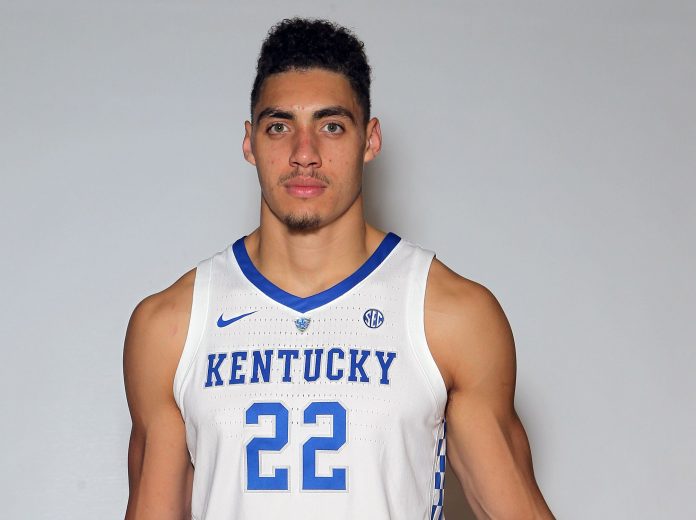
When questioned about his outstanding work ethic, University of Kentucky basketball player Reid Travis responded, “I hate it when talent or skill is not put to use. I’d hate to look back and see that I wasted a gift.”

2 Corinthians 9:15 says, “Thanks be to God for his indescribable gift.”

Don’t ignore or waste God’s gift to you this CHRISTmas!