Power in the present…

Sports Gambling: The Noble Experiment II

The Good, the Bad and the Ugly
By now you have heard of the United States Supreme Court’s decision to allow individual States in the Union to pursue gambling legislation and regulatory schemes within their borders. The prospect for gambling in 49 States not named Nevada was made possible by the Court declaring that a 1992 law, the Professional and Amateur Sports Protection Act (PASPA), was unconstitutional. The 6-3 majority wrote in their opinion: “Congress can regulate sports gambling directly, but if it elects not to do so, each State is free to act on its own. Our job is to interpret the law Congress has enacted and decide whether it is consistent with the Constitution. PASPA is not.” Referring to New York v. United States, 505 U.S. 144 (1992), the Court reasoned that the States could not be commandeered to enforce a federal regulation.
The Good
The rewards are straightforward: the potential for added revenue with a reduction in the black and gray gambling markets. Legalized gambling also means more business creation, jobs, related opportunities and work for lawyers.
Specifically, professional sports leagues stand to gain by charging a premium for copyrightable and trademarkable content, namely its players, brands, and potentially its statistics when analyzed and formulated in a specific way. If the gambling houses want to play it smart, they will include the professional sports leagues’ senior leadership and the players associations’ to grow the gambling programs together, to avoid getting sued, with the players, teams, leagues, gambling houses, casinos and bettors participating in the profits. Of course, all of this assumes a regulatory scheme is in place to protect consumers and all parties involved before the gambling begins.
In addition, it will be interesting to see if sports broadcasting companies (NBC, ABC, Fox, TNT, etc.) and technology distribution platforms/companies (Verizon, AT&T, Hulu, Amazon, Facebook, Apple, etc.) seek a piece of the pie since they are the ones broadcasting and distributing the copyrightable and trademarkable sports content.
The Bad
There is roughly a 5 percent margin for profit in gambling. A profit for new partners involved in the process, namely the leagues and the players associations, requires that the profit come from somewhere. An increase in profit assumes that more people will gamble or that current gamblers will be brought out of the darkness (e.g., illegal online gambling) and into the light of legalized gambling. It also assumes that any regulatory scheme will pass the “cost of doing business” (i.e., gambling fees and taxes) onto the consumer so that the profit margins are maintained.
The Ugly
Rhetorically speaking, was PASPA the second iteration of the original noble experiment, the prohibition against alcohol? Did PASPA seek to regulate moral behavior? Will there now be an explosion in sports betting as there was after prohibition, the first noble experiment? What are the potential consequences of legalized gambling in the United States?
First, imagine navigating the federal and state regulatory schemes as a participant, manager, owner, or lawyer in the gambling space, interpreting both federal and state law. For example, leaders in the United States Congress have already discussed presenting a federal regulatory scheme for gambling. Moreover, each State will also have to have its own law on the books before proceeding with state-sponsored or legal gambling. The process and implementation alone will be fascinating to follow. Hopefully, Congress and the State’s provide clear vision as to what legal gambling is allowed and where so as to avoid confusion. A regulation is after all only as good as its enforcement and interpretation.
Second, collegiate and professional athletes stand to be in a precarious situation. Unfortunately, baseball legend Peter Rose learned the hard way with illegal sports gambling. Since the door is now open through legalized gambling, however, a regulatory scheme at both the legislative (federal and state) and administrative (sports leagues) levels will be important to make sure that the integrity of sport and its participants are maintained. To that point, any gambling regulatory scheme would likely include a provision that direct participants in sports not be allowed to place a sports bet to avoid the appearance of impropriety.
Third, is more gambling a good idea for a society mired in debt? It means more revenues for States and the federal government, but what about the consumers? Is more regulation good for business? However, again, back to regulating moral behavior through a noble experiment law. In the end, it should be celebrated that legislation outlawing something without the federal government entering the space before or since was at the least awkward, and at its worst, unconstitutional, as the U.S. Supreme Court held.
Congress and the States will now get a second bite at the apple to set the course for legal sports gambling in America.
The West’s Top Performers: Pitchers, Part 2
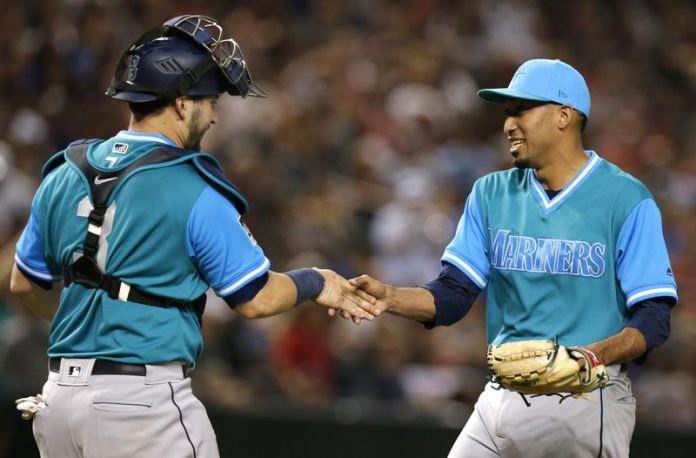
This is the final part of our two part series. Last week we discussed the hitters. This week we are looking at the ten best pitchers in the National League (“NL”) and American League (“AL”) West Divisions. In alphabetical order, by team.
Patrick Corbin, SP, Arizona Diamondbacks, NL West
4 wins, no losses, a 2.12 earned run average (“ERA”), 13 walks (base on balls/“BB”), 67 strikeouts (“SO”), a .167 batting average against (“AVG”) and a 0.82 WHIP (walks plus hits per inning pitched/”WHIP”) through 51 innings pitched (“IP”) is impressive. Closer Brad Boxberger and 8th inning set-up man Archie Bradley have been equally impressive for the first place Diamondbacks. Zach Greinke’s 53:6 SO/BB ratio is also stellar. All around, the Diamondbacks’ pitching has been great through April and parts of May for the 2018 season. Corbin is also a free agent after this season.
Adam Ottavino, RP, Colorado Rockies, NL West
3 wins, 1 save, (for a non-closer, which is Wade Davis’s job), a 1.23 ERA, 9 holds, 9 BB, 38 SO, a .087 AVG and a 0.68 WHIP through 22 IP. The 6’5 205 lbs. 32 year-old is a free agent after the 2018 season and was a 1st round draft pick in 2006 out of Northwestern. His home and away (outside Coors Field) splits are equally impressive and should he continue at this pace he will help his team win and cash in on a large contract for 2019.
The Entire Starting Pitching Staff, Houston Astros, AL West
The entire Astros starting pitching staff could be inserted here and possibly select members of their bullpen, but if we have to be very selective, it would be a three-way tie between Justin Verlander, Gerrit Cole and Charlie Morton, in that order. When Dallas Keuchel and Lance McCullers, Jr. are your fourth and fifth best starting pitchers in the rotation, respectively by statistics, you know the team is performing at an elite level. The numbers: The 35-year-old Verlander has a 1.21 ERA (best of this team’s starting pitchers), 4 wins against 2 loses, 12 BB, 77 SO, a .146 AVG and a 0.97 WHIP through 59.2 IP (tops this list and a team best). Cole, the youngest of this trio at 27, has a 1.43 ERA, 4 wins, 12 BB, 86 SO (team best), a .155 AVG and a 0.74 WHIP through 56.2 IP. The 34-year-old Morton has a 2.03 ERA, 5 wins and no losses, 17 BB, 62 SO, a .175 AVG and a 0.97 WHIP through 48.2 IP. Morton is a free agent after the 2018 season, whereas Verlander and Cole will enter the free agent marking after the 2019 season.
Shohei Ohtani, SP (and batting cleanup), Los Angeles Angels of Anaheim, AL West
Tyler Skaggs has been great this year, but when you measure his statistics against Ohtani’s, you realize that Ohtani’s pitching statistics are a little better and he hits cleanup on the days that he does not pitch (or the days before and after that he pitches). We spoke about the potential greatness of the 23-year-old Ohtani previously, but as for now, the numbers: a 3.58 ERA, 3 wins against 1 loss, 13 BB, 43 SO, a .198 AVG and a 1.10 WHIP through 32.2 IP. Did we mention that he hits cleanup for the Angels offense as well?
Walker Buehler, SP, Los Angeles Dodgers, NL West
Normally, Clayton Kershaw would top this list, and he has been equally the perfectionist this year as in years past, but he is currently on the disabled list (with half of the Dodgers starting lineup and pitching staff) and only active players could be selected. That being said, the 23-year-old Kentuckian out of Vanderbilt University is an absolute stud and looks like the next Orel Hershiser, if not with more upside, should he stay healthy after Tommy John surgery. Through 22 IP, he has a 1.64 ERA, two wins, 27 SO against 7 walks, a 1.00 WHIP and a .190 AVG. If he keeps this up, Ohtani and Buehler may be the respective Rookies of the Year for each league, and the Dodgers third straight player selection.
Sean Manaea, SP, Oakland Athletics, AL West
Although closer Blake Treinen has been stellar this year, Manaea has a no-hitter under his belt this season, which was against a well-playing Boston Red Sox team. The numbers: 55.1 IP (third best behind Verlander and Cole), 7 BB, 45 SO, 4 wins against 4 losses, a 0.72 WHIP, 2.11 ERA and .170 AVG.
Brad Hand, RP, San Diego Padres, NL West
While Tyson Ross and Joey Lucchesi have been exceptional this year, closer Brad Hand, has the upper hand, pun intended. In his third season in San Diego, Hand has been a model of consistency. This year’s numbers stack up to the past two through this time of the season: 20.2 IP, 10 BB, 33 SO, 1.11 WHIP, 2.61 ERA, a .170 AVG and 11 saves. If the Padres are struggling, look for Hand to be a significant trade piece to a contending team looking for bullpen help.
Back of the Bullpen, San Francisco Giants, NL West
Both closer Hunter Strickland and set-up man Tony Watson have been great this year. Johnny Cueto has been great too (0.84 ERA through 32 IP), but he is on the disabled list and therefore could not be considered for this list. The two relievers could be twins, statistically speaking: 17-17.2 IP, 5 BB, 19 SO, 1.02-1.18 WHIP, 2.55-2.65 ERA, .197-.238 AVG, with 7 holds for Watson and 8 saves for Strickland (although he also has 2 blown saves).
Edwin Diaz and James Paxton, Seattle Mariners, AL West
Diaz and Paxton have been studs this year, especially Diaz. Diaz has 19.1 IP, 9 BB, 34 SO, a 0.78 WHIP, a 1.86 ERA and a .094 AVG, with 13 saves (tops this list) and 1 blown save. Paxton has logged 53.2 IP, 19 BB, 71 SO, 2 wins, a 1.12 WHIP, a 3.52 ERA and a .206 AVG. Until Félix Hernández steadies the ship, the aforementioned have been the pitching staff anchors.
Bartolo Colon, Texas Rangers, AL West
You either laughed or searched the nearest Wikipedia page when you saw Bartolo Colon’s name here, but the stats do not lie. Cole Hamels has been great and will be Cole Hamels, but Colon, 44, is nearly ten years older than the next youngest person on this list (Justin Verlander, 35). He encroaches Jamie Moyer’s and Jesse Orosco’s records daily, who pitched until they were 49 and 46, respectively. Colon also has a better ERA than Hamels (3.48 to 3.32), and he brings 43.1 IP, 3 wins (against 2 loses), 4 BB, 29 SO, a 0.90 WHIP and a .223 AVG. His success has obviously helped his team, while reliever Jose Leclerc has been even better. The 24-year-old is 20 years younger than Colon and brings 13.1 IP, 2 holds, 6 BB, 18 SO, a 0.75 WHIP, a 2.03 ERA and a .093 AVG.
For now, that concludes our “Best of the West” series. Back next week on a new topic.
The West’s Top Performers: Hitters, Part 1

This is part one of a two-part series. Next week, we will look at the ten best pitchers in the National League (“NL”) and American League (“AL”) West Divisions. This week, we stay in those Divisions, but we are looking at the ten best hitters, statistically speaking. In alphabetical order, by team:
A.J. Pollock, CF, Arizona Diamondbacks, NL West
It is fair to say that Pollock is back after an injury-led 2017. His 10 home runs (“HR”), 29 runs batted in (“RBI”), 8 stolen bases (“SB”), .306 batting average (“AVG”), .362 on-base percentage (“OBP”), and 1.032 on-base plus slugging percentage (“OPS”) are tops for his team and rival some of the best hitters in baseball right now. He is the spark plug to the Diamondbacks’ offense.
Nolan Arenado, 3B, Colorado Rockies, NL West
Arenado and his teammate Charlie Blackmon were close, but Arenado just edges him out with 34 hits, 8 HR, 21 RBI, 1 SB, .315 AVG, .409 OBP, and 1.021 OPS. Arenado’s splits are impressive as well since he has more HR’s and RBI’s on the road versus at home in the Rockies, but his batting average has a 200-point difference (.439 at home, .239 on the road). Arenado, Blackmon, and Trevor Story lead this offense.
Carlos Correa, SS, Houston Astros, AL West
Correa’s teammate, José Altuve, has a slightly better AVG and OBP, but Correa as the shortstop edges out Altuve with his power. Correa has 38 hits, 5 HR, 25 RBI, 2 SB, .299 AVG, .369 OBP, and an .881 OPS. Correa is the emotional and statistical leader of this star-studded line-up.
Mike Trout, CF, Los Angeles Angels of Anaheim, AL West
Mike, Trout. He leads his team and the league in many stats, and he has been doing it every year since his first full season in 2012. He has 42 hits, 12 HR (tops this list), 24 RBI, 6 SB (tops this list), .336 AVG, .458 OBP (tops this list), and a 1.178 OPS (tops this list). Need much more be said? He our era’s version of a healthy Mickey Mantle, without being a switch-hitter.
Yasmani Grandal, C, Los Angeles Dodgers, NL West
Grandal is about the only thing not injured or going wrong for the Dodgers right now. Manager Dave Roberts said that without Grandal he does not know where the team would be. Grandal is a catcher and sometimes first baseman, who is a free agent at the end of the 2018 season. His stat line is impressive: 28 hits, 4 HR, 21 RBI, .272 AVG, .372 OBP, and a .848 OPS. His .272 AVG is his highest since his rookie season.
Jed Lowrie, 2B, Oakland Athletics, AL West
At age 34, Lowrie is the oldest hitter on this list, but his early season returns have been great for the A’s. Like Grandal, he is also a free agent after the 2018 season and had another stellar year last year. However, Lowrie already has half or more than half his 2017 HR and RBI totals this year through a month a half. His stats are as follows: 48 hits (tops this list), 8 HR, 31 RBI (tops this list), .353 AVG (tops this list), .405 OBP, and a 1.008 OPS.
Christian Villanueva, 3B, San Diego Padres, NL West
Having a breakout year, his 26 hits, 9 HR, 20 RBI, 1 SB, .265 AVG (lowest on this list), .351 OBP, and .943 OPS are tops for the Padres.
Brandon Belt, 1B, San Francisco Giants, NL West
Signed through the 2021 season, Belt and his new teammates, Evan Longoria and Andrew McCutchen, are providing a significant source of the team’s offense this year. Belt has 31 hits, 6 HR, 17 RBI, 1 SB, .298 AVG, .422 OBP (second on this list behind Trout), and a .970 OPS.
Mitch Haniger, RF, Seattle Mariners, AL West
Mitch who? He was a part of the Jean Segura trade with the Diamondbacks. His stats do not lie: 35 hits, 10 HR, 27 RBI, 1 SB, .297 AVG, .380 OBP, a 1.007 OPS, and a significant reason why the Mariners are one of four winning teams in the AL West right now, with the team currently in third place behind the Angels and the Astros. He is this year’s version of the Dodger’s Chris Taylor. This one’s for you, Jerry Dipoto.
Nomar Mazara, SS, Texas Rangers, AL West
The second youngest hitter on this list behind Carlos Correa (by half a year), which says a lot considering how much Correa, and Trout (26 years old), have accomplished for being so young. Mazara is a 6’4 stud in his third year having hit a total of 47 HR and 188 RBI in his brief career to date. Joey Gallo on his team and across the diamond is bigger and stronger, but Mazara has the better batter’s eye, at least according to batting average. His stats: 37 hits, 7 HR, 23 RBI, .278 AVG, .333 OBP, and an .815 OPS. An impressive young hitter.
Back next week with the pitchers.
Where will your favorite sports team play next?

The Jacksonville-London Jaguars, Montreal Expos, Mexico City Montañas and Portland Greens might know!
International sports expansion is upon us
The Jaguars got married and took a second last name in London, baseball is back in French-speaking Canada, the Mexico City Montañas fight high altitude baseballs, but not in the Rockies, and the Portland Greens have beer and “going green” night. Despite this author making up those team names, they might be the headlines on your favorite sports website come 2019 and beyond.
The NFL’s Jacksonville Jaquars owner Shahid Khan recently placed a bid for Wembley Stadium in London for $1 billion. He wants to host the Super Bowl and the World Cup at the stadium. Khan also owns Fulham F.C. in London, part of the English Premier League.
The MLB’s Boston Red Sox owner John Henry also owns Liverpool F.C. of the English Premier League.
The NFL’s Los Angeles Rams owner Stan Kroenke also owns Arsenal F.C. of the English Premier League.
The NFL’s Tampa Bay Buccaneers owners Avie, Bryan, and Joel Glazer also own Manchester United of the English Premier League.
One only need to look at the lists of America’s Richest Sports Team Owners 2017 and The World’s Richest Sports Team Owners 2018 via Forbes to see that sports team owners have money and that money is based both here in the United States and abroad.
What does this mean for the future of sports in America? It means that the move to go international is upon us. Over the past five to ten years, Major League Baseball, the National Basketball Association, and the National Football League have all had teams in their leagues play in games overseas. The matches have been preseason games for the NBA, but the NFL and the MLB have played both preseason and in-season games in foreign markets. The NFL has played in London (the Jaquars multiple times), while MLB teams have played in San Juan, Puerto Rico, Monterrey, Mexico, Sydney, Australia, and Tokyo, Japan. The MLB also has the World Baseball Classic, now in preparation for its fifth iteration in 2022.
If money is a driving factor in moving sports overseas, the Indian Premier League (cricket) currently has the eighth largest sports television broadcast deal in the world, worth more in dollars than the National Hockey League at $510 million annually. The deal is actual more valuable than stated because its term is for more dollars over a shorter period of time (2018-2022) versus other major sports that generally go 6-10 years in length. This shorter window allows the IPL to exploit their rights again as a free agent would when hitting the open market. One thing to note, broadcast rights always go up, never down.
If viewers are a driving factor, despite having the largest sports television deals and valuable sports franchises, more people reside outside of the United States and the United Kingdom than do in it. These are markets full of anxious fans possibly waiting for content to reach them. For example, 2.7 billion people live in India and China alone, versus the 391 million people living in the USA and the UK. The distribution channels are already here, will your international city be the next to host a sports franchise? It is possible that expansion into Canada, Mexico, and the other parts of the United States are likely.
Will “ShoTime” follow “The Great Bambino” into the batter’s box?

Shohei Ohtani, the Los Angeles Angels of Anaheim’s 23-year-old pitching and hitting phenom, is not the first athlete to woo the American public. Babe Ruth also once captured America’s collective hearts when he burst onto the scene for 14 years in the 20th century. In terms of the rules, the game of baseball has not changed much and because of those rules, Shoehei “ShoTime” Ohtani may soon be following Babe “The Great Bambino” Ruth into the batter’s box and off the pitching mound, or vice versa.
During Ohtani’s start on April 17, he was pulled from the mound after two innings due to of a reoccurring blister problem he says often happened in Japan, but he was able to make his next start. True to form, it was announced Sunday Ohtani would make his next scheduled start in Houston against their division rival, the Astros, on April 24. More concerning, however, might be the stressed ligament in his pitching arm elbow that was leaked during the offseason as Ohtani and his representation were seeking team offers. Whether the ligament is a similar issue like the one Los Angeles Dodgers Kenta Maeda has that’s workable, remains to be seen.
Ohtani is a once-in-a-lifetime talent, yet fans, experts and teams are having a hard time making the comparison to another famous player because it’s so rare. Bo Jackson and Deion Sanders wooed us because they played two sports really well. Arguably, their careers also ended early in one sport because they played two sports. Babe Ruth was one of the greatest pitchers in baseball before picking one side of the game (hitting vs. pitching). What will be interesting to watch in the coming months and years is if Ohtani’s body can survive the 162-game season playing both sides of the ball. As fans, we all hope he can and capture the collective American heart while accomplishing it.
On the other hand, history tells us another thing. From 1914-1919, Babe Ruth pitched and hit. Interestingly, but not surprisingly, in each year during that time span, he decreased in pitching statistics and increased in hitting statistics. In 1919, he pitching 133.1 innings, the second lowest of any season to that point in his career besides his rookie season in 1914, yet he hit more home runs (29) than any time in his career to that point. In 1920, when he became a full-time hitter and outfielder, he mashed 54 home runs and knocked-in 137 runs while batting .376. From 1920, his first year in Yankee pinstripes after being traded from the Boston Red Sox until his last season in 1935, he pitched a total of 31 innings and hit 665 home runs with a lifetime batting average of .342.
Ohtani’s current batting average is .342 and he’s pitched 15 innings to date. He also hit 100 mph multiple times while pitching in his start before last. The talent is there and maybe with today’s improvements in health and training, days off, pitching every seventh day, etc., maybe, just maybe, he can be both the greatest hitter and greatest pitcher of this era. More than likely, he’ll need to lean on one over the other, or pick one side, because to this point in baseball history, it’s not been done. Regardless, Ohtani has started a new category of player who plays two sides of the same game (at least in baseball) and does so very well. However, whether he plays enough to qualify as the best, history will tell.
What Disney, ESPN+ and Hulu means for Sports Television
You should know four important things in 2018 when it comes to live sports television broadcasting.
Disney owns a 30% stake in Hulu
When Disney and Fox came to a $66 billion dollar agreement (including a portion of Fox’s debt), it included Fox’s 30% ownership stake in the Hulu platform. If the United States Department of Justice approves the Disney-Fox deal, Disney, already with its own 30% ownership stake, would own a 60% majority of the Hulu platform. Is it any surprise Hulu recently jumped into the live sports broadcasting space by purchasing the rights to some NHL and NBA playoff games? It is possible Hulu’s owners are testing the market for live sports broadcasts in anticipation of having one full-fledged owner who could conceivably make a play to buyout NBCUniversal from its 30% ownership share to control the platform all together.
Disney owns ESPN+
ESPN+ launched on April 12, 2018, while the app was conceived with the idea to move to over-the-top/direct-to-consumer digital consumption. Consider this: Disney is likely to have two platforms in the sports market (Hulu and ESPN+) by 2019. Disney may now be (or may become) the largest industry player in content creation and distribution in the entertainment and sports space. Remember, Disney also owns ABC.
Disney has another OTT platform in the works
Disney’s third platform, said to be a one-stop-shop for Disney movies and the Fox library it recently purchased, could potentially be another landing spot for live sports broadcasts or sports replay content. Interestingly, an untapped market in the content distribution space has been on replays. Sports enthusiasts love watching replays and until now, such games have been limited to YouTube and nonlinear television.
Netflix has not entered the sports space, but Tencent has
According to the Hollywood Reporter, Netflix may be the eighth largest media conglomerate with a market cap of $146 billion, $8 billion shy of both Disney and Comcast. However, Netflix CEO Reed Hastings has said Netflix’s current business model does not lend itself to entering live sports broadcasting and that the company has no plans to follow the Amazon, Hulu or Facebook Live pack. On the other hand, internationally, Netflix has grown its subscribers, while companies like the Chinese-owned Tencent has brokered a deal with the NBA to broadcast games.
Going forward, the international space should not be overlooked as technology grows and allows content to be more accessible to cities and consumers across the globe. The global audience already rivals and sometimes beats American audiences for movies. We can be sure the world’s largest distribution companies, in both entertainment and sports content, will look to capitalize on the market trend to go over-the-top and global.
A Golden Age: The business of content creation, distribution and consumption
There was a time when entertainment meant film, television, stage acting and the music business. It was also a time when media meant the five o’clock news, anchors and Nielsen ratings. There was a time when sports meant Sunday night football, the national baseball game of the week and an occasional tournament or sports special.
Today, we, the consumers, have so many more options at our fingertips. We are no longer at the precipice of technological innovation, it is here. The availability of technology and its ease of use have led to a renaissance in content consumption.
Before 2004, Facebook did not exist. Twitter arrived in 2006, and Instagram in 2010. Snapchat arrived in 2011. Before 2007, Netflix was a mailbox movie delivery service. We now watch basketball games on Twitter and Facebook, stream direct-to-consumer original content movies and television shows and consume massive amounts of content on multiple platforms.
The tech giants of the Silicon Valley went Hollywood and even made a television show about it. Amazon, Apple and Netflix are as much a part of Hollywood now as the big six studios and possibly have a brighter future considering their ability to adjust and move with the times. People want more content, all the time and everywhere. The companies that survive will be able to meet the consumer there.
In a ten-year period, the entertainment, media and sports industries have principally become one category through technological innovation by making content of all varieties so much easier to create, distribute and consume. For the aforementioned reason, a retired professional athlete is just as likely to become a television color commentator or radio host, or actor, or rapper as scoring a touchdown or hitting a home run. While an actor is more likely to appear in television and movies, share information and pictures on social media, while extending and expanding their careers as ever before.
Technology has made it so that companies are more willing to take a chance on talent, content and investments. Digital distribution has made delivery easier, while opening up new markets in a Galaxy Far, Far Away. In the 1930s, Hollywood had its Golden Age and it was through technological and communication advancements. In 2018, we are again in a Golden Age as Hollywood, the sports and media industries have teamed up with the tech giants in the Silicon Valley to direct, distribute and display their content.
The Future of Sports Television

As we cruise through 2018, the entertainment, media and sports industry is abuzz about two things: (1) getting content to the consumer quickly and more efficiently, and (2) through various media applications and platforms. The sports world has been somewhat slower to change because sports are generally consumed live as opposed to recording a television show or watching a movie on Netflix, Hulu or Amazon Prime. There is really one simple reason for this: sports can be highlighted and recapped in one score, who won or lost, as opposed to a television show that cannot be recapped in 140-280 characters or less. It is not that there is a lack of a plot, drama or characters in sports, the opposite is true. However, the point is, that gambling houses are dependent on who won and lost as opposed to character twists in a television show or movie. Information must move much quicker in sports because it is played daily and throughout the year compared to seasons and seasonal months for movies and television.
Knowing the above, what can sports enthusiasts expect going into the future?
Increase in the Use of Over-the-Top (OTT)/Direct-to-Consumer Platforms
YouTube is currently a top platform for sports consumption and it is used for both watching live sports, recaps, highlights, interviews, analysis and reminiscing old matches. Major League Soccer teams LAFC and the Seattle Sounders are now showing their matches on YouTube TV, while the National Basketball Association and Major League Baseball have struck deals with YouTube TV as a sponsor and platform. ESPN’s new Over-the-Top (OTT) platform ESPN+ is set to launch on April 12, 2018. Endeavor recently purchased OTT platform NeuLion for $250 million. Amazon Prime, Hulu and others are already into OTT live and recorded sports. Netflix CEO Reed Hastings has said his company will not enter the live sports race, but know this; some OTT or direct-to-consumer platform(s) will make a push to have more sports and recorded sports available to consumers. Apple, Facebook and Twitter have all entered the sports broadcasting race or have been rumored to be interested in one sport or another.
Increase in the Use of Virtual Reality/Augmented Reality
With the 2018 Masters Tournament nearly upon us, CBS is using virtual reality to display the iconic Augusta National Golf course for fan-friendly viewing and enjoyment. We can foresee further use of technology in showing how injuries happen, could have been prevented or in routes taken by an outfielder to snag a fly ball. We could also see fans taking part in augmented reality at stadiums through fan experiences in catching a pass, sacking a quarter back, running for a touchdown, returning a kickoff, kicking a field goal, etc. Sports are supposed to be enjoyed and bringing fans closer to the player experience is ideal for increasing fun, enjoyment and revenues.
Increase in the Use of Player Performance Data
Despite the recent data breach by Under Armour via MyFitnessPal, data and information collection is on the rise. Analytics is here to stay and the information collected from platforms, apps and algorithms can help predict outcomes, consumer behavior, player performance and much more when collected and analyzed properly and efficiently. If a team can help itself by predicting team performance through analytics, it will also want to prevent or minimize injury risk with data thus lengthening and strengthening an athlete’s career.
Revised Sponsorship Deals based on Analytics
Anheuser-Busch recently implemented a new sponsorship deal for its partners by stating it would pay the traditional standard fee for sponsor space and mentions, but that the fee would increase when viewership increased. Think of this like a sports team that charges more for a ticket to a specific game because a certain team is in town. The point here is to reflect the actual benefit through data collection.
Data tells us where we have been and where we are going. It is the numerical reflection of history with an eye towards the future. Remember, “Those that fail to learn from history, are doomed to repeat it,” Winston Churchill. Interestingly, not much has changed; data collection is really about determining what consumers want, when and where. Businesses are using that data to increase their revenues, improve performance and consumer enjoyment.
e$ports: If you cannot play, you $hould pay attention
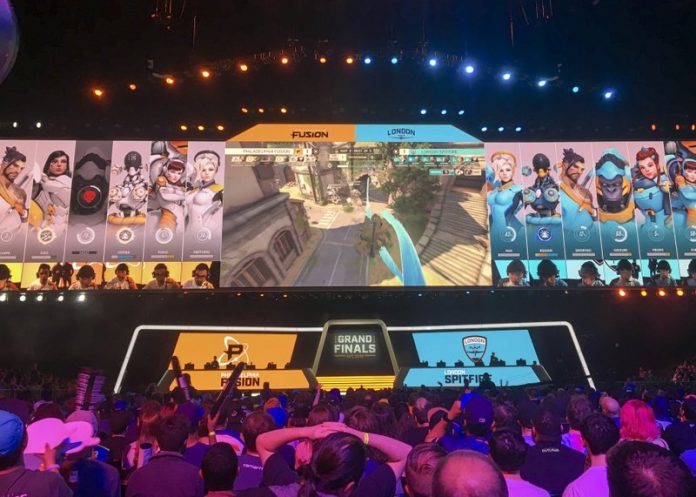
Maybe you have never heard of eSports. Maybe you do not care to know. Simply, it may not be of interest you. Here is the thing though, eSports became relevant to larger society when the industry began to bring in substantial revenues and obtain partnerships and sponsorships from major recognized brands.
First, what is eSports? eSports is a competition between players in a video game. The twist is that what was formerly done from home is now being down in large, sold-out stadiums in Las Vegas, the Staples Center in Los Angeles and in underground bars in London. eSports teams are now owned and sponsored by former professional basketball players like Rick Fox, companies like Coca-Cola, professional sports leagues and individual teams in those leagues. Prize money and sponsorship dollars are through the roof. There has even been talk of unionizing the players and instituting a drug policy because of the overuse of the drug Adderall.
Second, the question of whether eSports is a “sport” is immaterial. Once the sport began approaching $1 billion in annual revenues, the naysayers have taken a backseat and have begun investing. When an investment is providing a substantial return, you ask where the investment is going, not what the dictionary definition says.
Third, talent agents and lawyers stand to profit from eSports. Agents and agencies representing the players and teams securing endorsements, while taking a percentage of winnings, endorsements, and other sources of income. Lawyers are needed to form the businesses, create tax savings and protections through corporations, draft contracts, review contracts and represent clientele for their needs.
The future is now and with universities like the University of California, Irvine creating an entire eSports imitative, live streaming deals with Amazon Prime® and the creation of Twitch TV, eSports is beginning to dominate the entertainment, media and sports landscape. The idea is simple: to make a profit you must meet your customers where they are at and provide what they want. The customer is always right means the customer should determine the services provided, not what the service provider needs. Is it any surprise that as mobile and digital communications have exploded in growth and influence that eSports has with it? eSports simply met customers where they were at, playing video games and turning that into a profit.
In the end, not everyone can be a superstar athlete. Only 1% of humans have those skills at the professional level. However, being unable to hit a 98-mph fastball, shoot a jump shot, or consistently land on the fairway and the greens should not prevent someone from finding a way to compete and making a living while doing what they love. This author does not play video games or compete in eSports, but he does pay attention and you should, too.