|
|

|
|
|
|
|
|
|
|
|
|
|
|
|

|
|
|
|
|
|
|

|
|
|
|
|
|
|
|
|
|
|
|
|
|
|
|
|
|
|
|
|
|
|
|
|
|
|
|
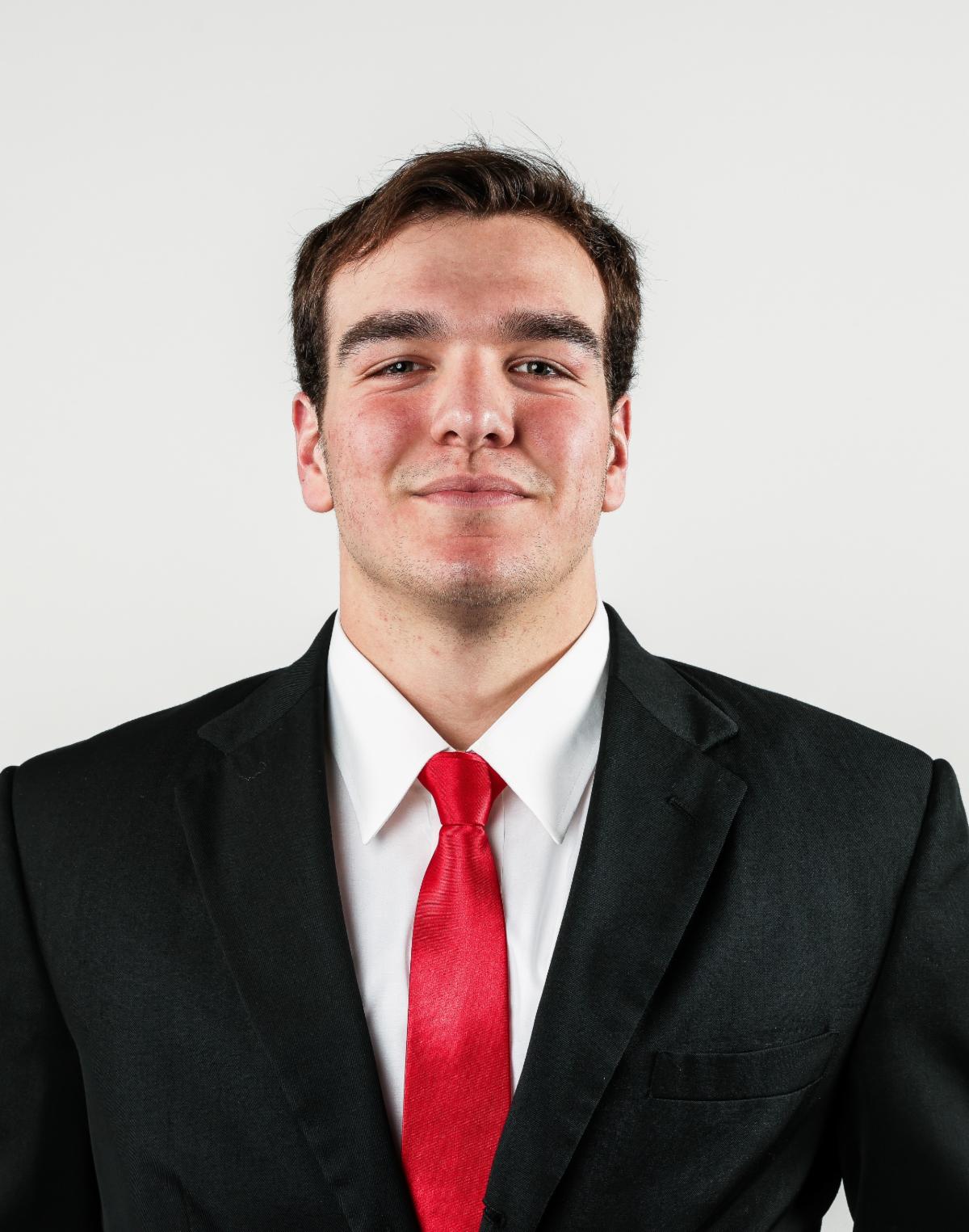
As we hit the halfway point of the college football season, talk of Heisman candidates naturally heats up. Names have come and gone atop the list, but this week Julian Sayin made his statement loud and clear — launching himself squarely into the thick of the race. Coming into the game, Wisconsin boasted one of the nation’s better rushing defenses, meaning Ohio State’s game plan was expected to lean heavily on the passing attack. Sayin embraced that challenge — and delivered his best performance of the season.
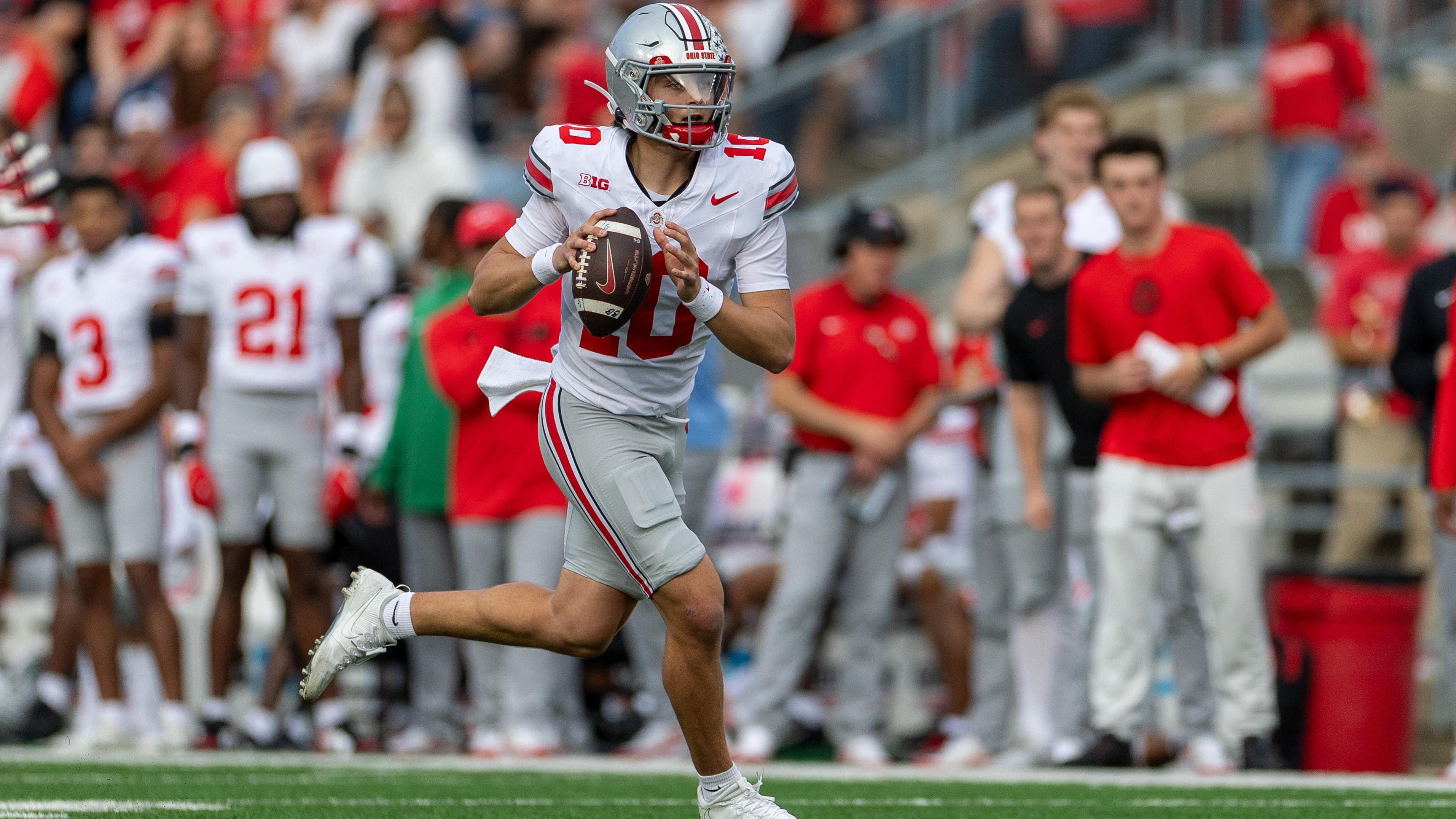
Photo Cred: Bleacher Report
The freshman quarterback completed 36 of 42 passes for 393 yards and four touchdowns, leading the Buckeyes to scores on six of their eight offensive drives. The only two drives that didn’t end in points included a missed field goal. Sayin spread the ball around to ten different receivers, showing command and poise as he hit targets on short, intermediate, and deep routes with precision.
Ohio State’s opening possession set the tone. The Buckeyes marched 89 yards in nine plays, capped by a 33-yard touchdown strike to Carnell Tate. Tate has been one of the breakout stars of the season, rapidly climbing draft boards as one of the top wide receiver prospects in the upcoming NFL Draft. He finished the day with six receptions for 111 yards and two touchdowns.
Jeremiah Smith continued his strong sophomore campaign as well, catching nine passes for 97 yards, further solidifying himself as one of the most reliable playmakers in college football despite facing constant defensive attention. While Sayin and the offense stole the headlines, Ohio State’s defense once again proved why it might be the best in the country. The Buckeyes earned their second shutout of the season, blanking Wisconsin 34–0 and holding the Badgers to just 144 total yards.
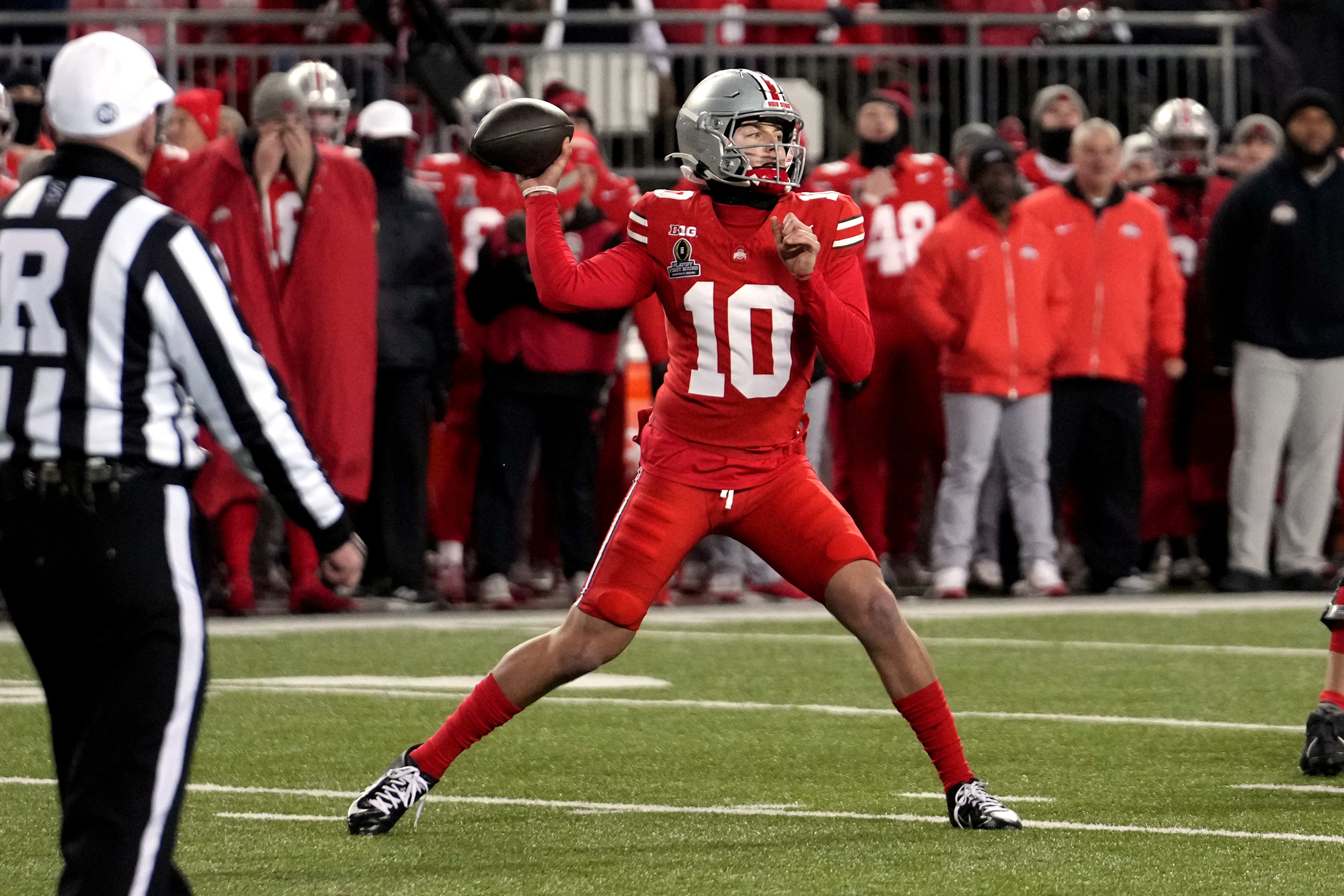
Photo Cred: The Spun
Through seven games, Ohio State’s defense has been historically dominant — allowing an average of just 5.8 points per game. That’s less than a touchdown per contest. Despite losing their defensive coordinator and eight starters to the NFL Draft last year, the Buckeyes have seamlessly reloaded and look as strong as ever. Now sitting undefeated, Ohio State heads into its second bye week of the season riding high and full of confidence.
Up next is a matchup that once looked like one of the biggest games of the year — a home clash with Penn State. However, the Nittany Lions’ season has unraveled. They’ve lost four straight games, three to unranked opponents, and recently fired head coach James Franklin. Still, the Buckeyes are taking nothing for granted. With two weeks to prepare, they’ll look to defend home turf and continue their march toward the College Football Playoff — and perhaps, a Heisman Trophy for Julian Sayin.
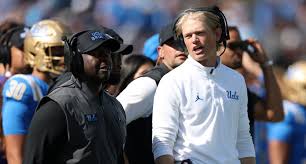
UCLA entered the 2025 college football season projected 15th in the Big Ten out of 18 teams. Expectations were low, and the Bruins had no clear identity. Second-year head coach DeShaun Foster hoped to silence the critics and guide UCLA to its first bowl appearance since 2023. But from the very first game, it became evident — the Bruins were not a competitive football team.
They opened the season with an abysmal 43–10 home loss to Utah. Quarterback Nico Iamaleava struggled mightily, and nothing seemed to click on either side of the ball. Foster hoped to regroup with two “get-right” games against non–Power Five opponents UNLV and New Mexico, but those matchups only confirmed what fans feared: he wasn’t ready for the job.
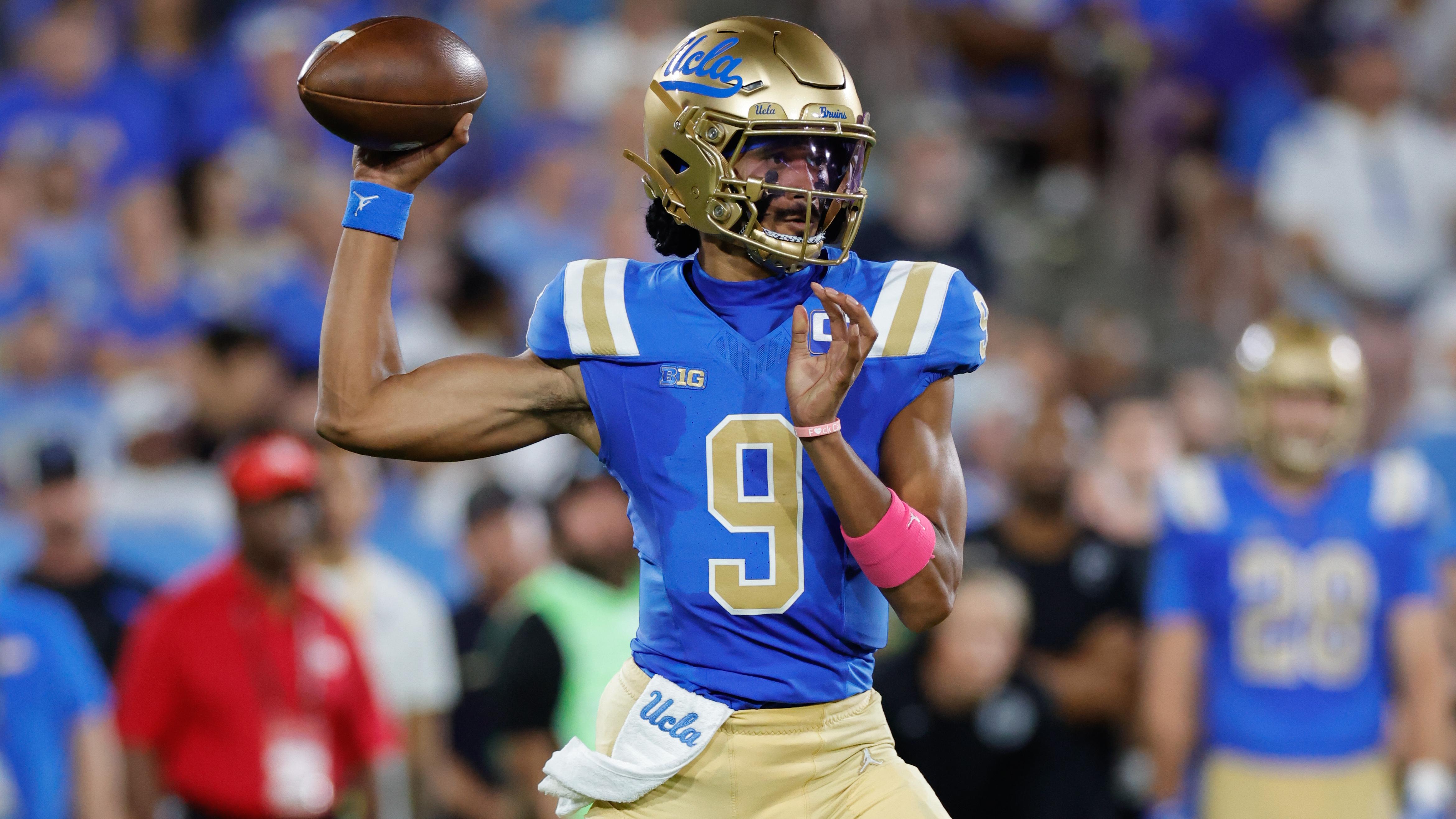
Photo Cred: BR
A 30–23 loss at UNLV followed by a humiliating 35–10 blowout at home against New Mexico was all Athletic Director Martin Jarmond needed to see. After Foster’s postgame remarks —
“Not the outcome at all that we wanted. It’s coming down to discipline and execution. Not executing at a high level and not making plays when we need to. We’re not at our best when our best is needed. We’ve got two weeks to fix this, and just looking forward to this opportunity to get it fixed.”
— it became clear that opportunity would never come. Foster was fired immediately following the New Mexico embarrassment, along with defensive coordinator Ikaika Malloe.
Tim Skipper stepped in as interim head coach, while Kevin Coyle took over defensive duties. Unfortunately, first-year offensive coordinator Tino Sunseri remained — and the offensive woes continued. After a 17–14 loss to Northwestern in Skipper’s debut, Sunseri was shown the door as well. Though the defeat fell under Skipper’s watch, it was clear he didn’t yet have his full staff in place.
Enter Jerry Neuheisel, the former UCLA quarterback, who was elevated to offensive coordinator — and instantly revitalized the Bruins.

Photo Cred: UCLA
With a refreshed staff and a new sense of purpose, UCLA prepared to host the #7 Penn State Nittany Lions. From the opening kickoff, it was clear something had changed. Neuheisel’s scheme clicked, the running game dominated, and the Bruins showed a fight that had been missing all season. At halftime, the college football world was stunned — UCLA led 27–7. The Bruins held strong in the second half, pulling off a 42–37 upset that sent shockwaves through the sport.
The momentum carried into the next week, as UCLA traveled to East Lansing and dismantled Michigan State. After allowing an opening-drive touchdown, the Bruins responded with 38 unanswered points, cruising to a 38–13 rout. Returning home to face Maryland, UCLA looked to extend its winning streak to three. Oddsmakers favored the Bruins, but the Terrapins refused to back down. After a scoreless first quarter and a tight defensive battle, UCLA entered the fourth quarter trailing 10–7.
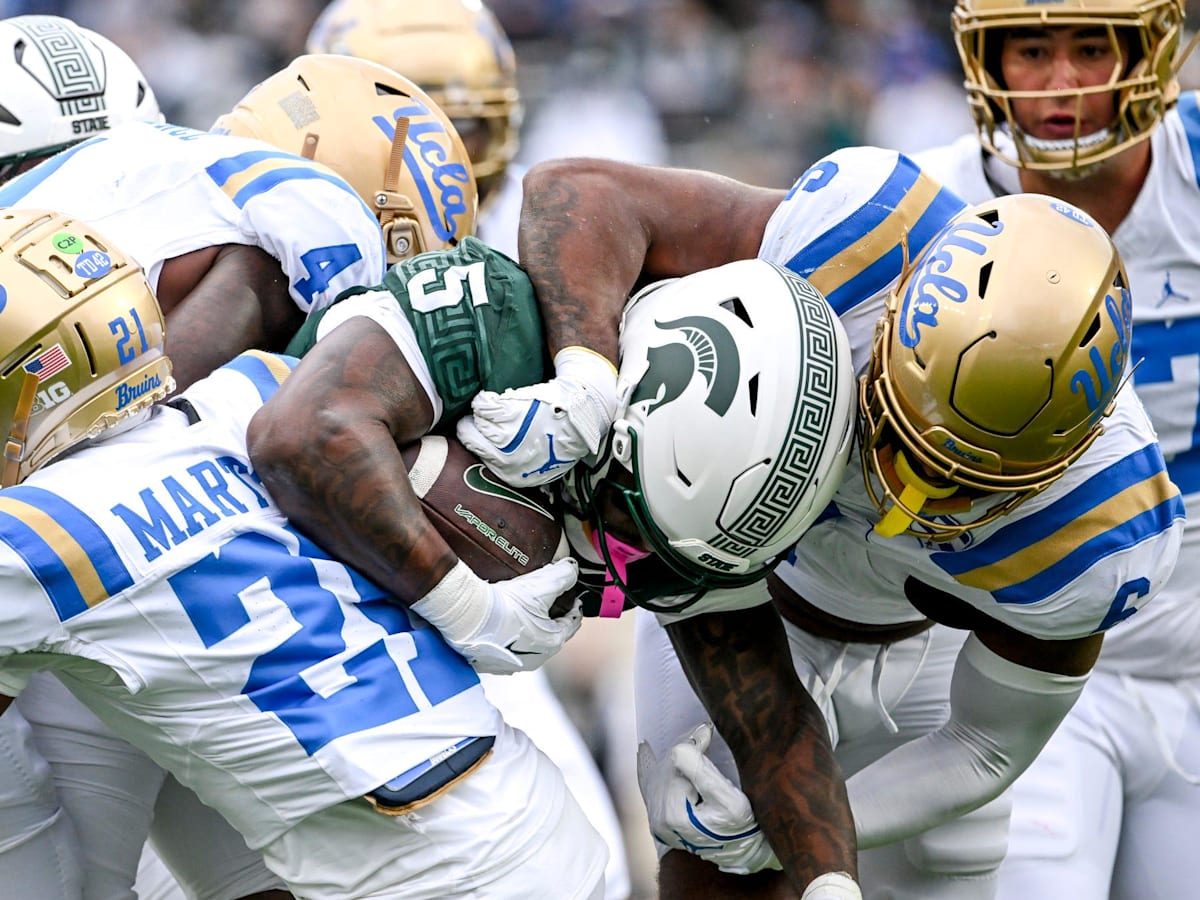
Photo Cred: SI
Needing a spark, the Bruins’ defense forced a quick three-and-out. But a fumble by Iamaleava killed the momentum — only for Coyle’s defense to respond yet again, forcing another punt. After a missed field goal with eight minutes remaining, the game hung in the balance. Then, with the clock winding down, Iamaleava led a masterful 80-yard drive in just two minutes, capped by a go-ahead touchdown to make it 14–10 UCLA. A Maryland interception and subsequent UCLA field goal extended the lead to 17–10 with two minutes left.
But Maryland wasn’t done. Backup quarterback Malik Washington engineered a 75-yard drive, connecting with Jalil Farooq for the tying touchdown with just 40 seconds remaining. With the game on the line, Iamaleava delivered again — finding Titus Mokiao-Atimalala on consecutive completions for 33 yards. With 18 seconds left and the ball at the Maryland 40, UCLA just needed a few yards for field goal range.
Then came the play of the night.
Anthony Frias II took the handoff, burst through the right side, and raced 35 yards down the sideline to the five-yard line with 11 seconds left. UCLA lined up for the potential game-winner, and kicker Mateen Bhaghani drilled it through the uprights.
UCLA 20, Maryland 17.
The Bruins had completed their third straight victory, improving to 3–4 on the season — a stunning turnaround from the program that looked lifeless just a month earlier. Next stop: Bloomington, where they’ll face the Indiana Hoosiers.
UCLA
Nico Iamaleava: 21/35, 221 yards, 1 TD, 2 INT
Anthony Frias II: 4 carries, 97 yards, 1 TD
Maryland
Malik Washington: 23/48, 210 yards, 1 TD, 1 INT
Dejuan Williams: 7 receptions, 86 yards
|
|
|
DALLAS (FWAA) – The UAB Blazers stood firm at their goal line in the final minute Saturday, holding off No. 22 Memphis four times from its one-yard line to win its “Battle for the Bones” game, 31-24. For taking its first victory over a ranked team since 2021 and snapping Memphis’ FBS-long 10-game win streak, UAB earned the Pop-Tarts Crazy Good Team of the Week for games the weekend of Oct. 18, as selected by the All-America Committee of the Football Writers Association of America.
 This is the second time for UAB (3-4, 1-3 in the American) to receive the award by the FWAA and the first time since 2014, when it closed out the regular season winning at Southern Miss, 45-26.
UAB was clinging to its 31-24 lead when Memphis looked to have a breakaway run for what would be the tying score with a minute left. But Blazers cornerback Tariq Watson made the play of the game when he caught Memphis running back Greg Desrosiers Jr. at the 1-yard line on a play confirmed by review that Desrosiers’ knee touched the ground just before his momentum took him into the end zone. UAB’s defense sealed the win from there, forcing four straight incomplete passes, helped by two Memphis false start penalties.
It was the first career win for interim head coach Alex Mortensen, the Blazers’ offensive coordinator since 2023, following the departure of former head coach Trent Dilfer earlier in the week. Mortensen engineered a command performance behind a quarterback, Ryder Burton, starting his first game. UAB controlled the ball with a time of possession advantage of 35:05-24:55 while outgaining Memphis, 470-362. Memphis only had seven possessions in the game.
Burton finished 20-of-27 for 251 yards and three touchdowns, the most passing yards by a UAB quarterback in his first career start since 2020, and wide receiver Iverson Hooks had a career performance catching 11 passes for 172 yards and all three of Burton’s touchdown tosses. Solomon Beebe scored on an 81-yard run, the longest rushing touchdown in school history.
The defense contained the nation’s 26th-ranked offense to just 362 yards, well below its average of 449, and far below its scoring average of 40.5 points per game. It was the Blazers’ first win over a nationally-ranked opponent since 2021 when they toppled No. 13 BYU, 31-28, and only the program’s fifth all-time win over a ranked opponent. Memphis had been tied with Ohio State the FBS’ longest current win streak at 10 games.
The win also ended Memphis’ three-game win streak in the series and claimed UAB’s first home win in the series since 2010.
UAB is idle this Saturday. Its next game is Sat., Nov. 1, traveling to UConn for a noon ET kickoff on the CBS Sports Network.
Since 2002, the FWAA has named a National Team of the Week. Coming into the 2025 season, 284 teams have been honored, including 101 different Division I programs. Each honored team will receive a custom Pop-Tarts “care package” along with a hand-crafted game ball made in America by Dallas-based Big Game USA, the nation’s leading manufacturer of custom footballs.
The other National Team of the Week nominee for the weekend of Oct. 18 was:
ABOUT KELLANOVA
Kellanova (NYSE: K) is a leader in global snacking, international cereal and noodles, and North America frozen foods with a legacy stretching back more than 100 years. Powered by differentiated brands including Pringles®, Cheez-It®, Pop-Tarts®, Kellogg’s Rice Krispies Treats®, RXBAR®, Eggo®, MorningStar Farms®, Special K®, Coco Pops®, and more, Kellanova’s vision is to become the world’s best-performing snacks-led powerhouse, unleashing the full potential of our differentiated brands and our passionate people. Our net sales for 2024 were $13 billion. For more detailed information about our commitments, our approach to achieving these goals, and methodology, please visit our website at kellanova.com.
ABOUT FLORIDA CITRUS SPORTS
FCS is a not-for-profit event management organization dedicated to positively impacting the Orlando region while enhancing the quality of life in Central Florida through world-class events, including the Cheez-It Citrus Bowl, the Pop-Tarts Bowl, the Florida Blue Florida Classic, the Camping World Kickoff and the FC Series. For more information, visit FloridaCitrusSports.com.
Founded in 1941, the Football Writers Association of America consists of 1,100 men and women who cover college football. The membership includes journalists, broadcasters and publicists, as well as key executives in all the areas that involve the game. The FWAA works to govern areas that include game-day operations, major awards and its annual All-America team. For more information about the FWAA and its award programs, contact Steve Richardson at tiger@fwaa.com.
NEW YORK –– Oct. 19, 2025 –– A look at seven statistical highlights from games played during the 9:30 a.m., 1:00 p.m. and 4:00 p.m. ET windows on Sunday, October 19, the seventh week of the 2025 season.
|
| For more from NFL Communications, visit media.nfl.com |
FWAA-NFF Super 16 Poll for Week 8 has been released. Panelist Ayokunle Spencer submitted his ballot. Here is this week’s Super 16 ranking.
WEEKLY SUPER 16
POLL
1 Ohio State
2 Indiana
3 Texas A&M
4 Alabama
5 Oregon
6 Georgia
7 Georgia Tech
8 Ole Miss
9 Oklahoma
1 0 Vanderbilt
1 1 Virginia
1 2 BYU
1 3 Missouri
1 4 Louisville
1 5 Miami (FL)
1 6 Notre Dame

The Missouri Tigers hit the road for the first time this season, traveling to Auburn, Alabama, for a back-and-forth battle against the Auburn Tigers. It wasn’t pretty, but in the SEC, road wins rarely are. What unfolded inside Jordan-Hare Stadium was a test of grit, patience, and survival — and when the dust settled, Mizzou walked away with a 24–17 overtime victory that kept their postseason dreams intact. From the opening kickoff, it was clear both teams came ready to trade blows.

Auburn struck first, methodically marching down the field for a touchdown on their opening drive, putting Mizzou’s defense on its heels early. But Missouri quickly responded, using a balanced mix of short passes and timely runs to get into scoring position. A field goal from inside the red zone put them on the board, and a defensive stop late in the first quarter helped swing momentum back their way. As the second quarter unfolded, both teams struggled to find rhythm.
Auburn’s defensive front made life difficult for Mizzou’s offensive line, while Drew Pribula’s timing with his receivers seemed slightly off. Still, Mizzou managed to capitalize on a short field after an Auburn turnover, punching in a touchdown to take a 10–7 lead. That advantage held into halftime after Auburn missed a potential game-tying field goal in the final seconds before the break. Coming out of the locker room, neither team looked particularly sharp. The defenses dictated play, forcing punts, sacks, and errant throws.
For Mizzou, the offensive frustration continued on the ground. For the first time all season, the Tigers were held under 100 rushing yards, unable to generate much push up front. The offensive line — a group that’s been inconsistent all year — struggled to climb to the second level and open holes for the backs, leaving Pribula to shoulder the offensive load through the air. Then came the fourth quarter, where things finally came to life. Auburn took advantage of a short field to reclaim the lead at 17–10, and the crowd roared back into the game.
But Mizzou didn’t flinch. With just over five minutes left in regulation, Ahmad Hardy found a crease off the left edge and ran in the tying touchdown, knotting the score at 17 apiece. The defense held strong from there, forcing a crucial punt to send the game into overtime. Overtime was pure chaos. Both teams missed field goals in the first extra period, keeping the tension high inside Jordan-Hare. But when Missouri got the ball again, they stayed composed. On a third-and-long situation, Pribula dropped back, stood tall in the pocket, and delivered a strike for the go-ahead touchdown.
It was the kind of throw that defines a quarterback’s confidence — especially after throwing two interceptions earlier in the game, his second straight week with multiple picks. When Auburn took over for their final possession, Mizzou’s defense slammed the door. A relentless pass rush forced Jackson Arnold into desperation mode, and on fourth down, Missouri brought the house — sacking Arnold to seal the game and ignite celebrations on the visiting sideline.

Photo Cred: Mizzou
It wasn’t the cleanest performance by any stretch. The run game never found traction, and the offensive line continues to be the team’s biggest question mark heading into the heart of conference play. The inability to sustain blocks and climb to linebackers has limited Missouri’s ability to control tempo, and tougher defensive fronts are still on the horizon. Yet, despite those struggles, Pribula once again showed resilience. He finished with 252 yards passing and the game-winning touchdown, flashing the poise and leadership Missouri will need as the season wears on.
Defensively, the Tigers deserve much of the credit. After allowing a touchdown on the opening drive, they clamped down, holding Auburn to just 10 points through the remainder of regulation and overtime. The front seven generated consistent pressure, producing multiple key sacks and forcing Arnold to hesitate in the pocket. The secondary, meanwhile, executed their assignments well — blanketing Auburn’s receivers and forcing an early interception that set up Mizzou’s first scoring drive of the night.
With the win, Missouri improves to 6–1, keeping their postseason hopes very much alive. It may not have been a statement victory in style, but it was one that speaks volumes about their toughness. Winning ugly still counts, especially on the road in the SEC. Next week, the Tigers travel to Nashville to face the Vanderbilt Commodores in what could be a pivotal matchup for both programs. Each sits on the edge of College Football Playoff contention — long shots, perhaps, but not out of the picture.
The winner will emerge with a clear path forward, while the loser will be forced to play flawless football the rest of the season to stay in the hunt. For Missouri, that’s motivation enough. They’ve proven they can win at home, they’ve proven they can win ugly, and now they’ve proven they can win on the road. If they can clean up the mistakes and get the ground game back on track, this Tiger team might be just getting started.
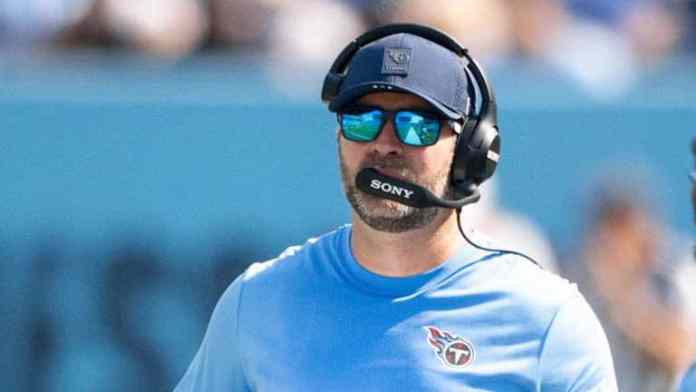
After recording a 3–14 record last season, the Tennessee Titans entered 2025 with a new head coach, Brian Callahan, and the first overall pick in the NFL Draft. To no one’s surprise, they selected Davey O’Brien Trophy winner and college phenom Cam Ward, hoping he could turn around the franchise. But with the Titans off to a 1–5 start, it was clear that something had to change. Callahan inherited a tough situation from day one — a roster lacking a true superstar, consistent quarterback play, or a reliable offensive line.
Despite those challenges, he stayed composed, worked tirelessly, and never publicly complained. Still, the NFL is a results-driven league, and Callahan’s one-and-a-half-year tenure came to an early end. Coaches getting fired during their rookie quarterback’s first season isn’t rare — and history shows it doesn’t always spell disaster. Let’s look at three examples from the past fifteen years when a team fired its head coach in their quarterback’s rookie year, and how those teams bounced back. We’ll also see why the Titans’ current situation feels eerily familiar to another team from just a season ago.

Photo Cred: USA Today
Dennis Allen posted back-to-back 4–12 seasons before being fired after an 0–4 start to 2014 — rookie Derek Carr’s first year. The Raiders finished 3–13, then hired Jack Del Rio as head coach. The turnaround was immediate. Del Rio named Latavius Murray the full-time starter, allowing Carr to take a major leap in 2015 with 32 passing touchdowns and seven wins.
By Carr’s third season, the Raiders won 12 games, fueled by a dominant rushing attack and 1,000-yard seasons from Amari Cooper and Michael Crabtree. While the Raiders never became perennial contenders under Carr, this was one of the first modern examples showing that the coach who drafts a quarterback isn’t always the right one to develop him — and that a change in leadership can unlock a young QB’s potential.
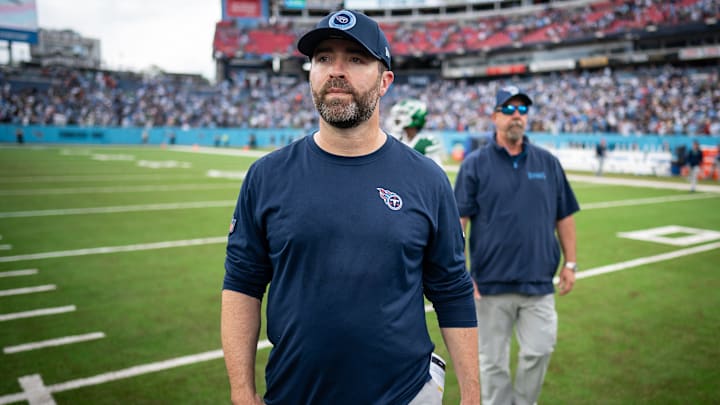
Photo Cred: SI
The 2014 Titans season was forgettable. Under new head coach Ken Whisenhunt, the team went 2–14 while rotating through Jake Locker, Charlie Whitehurst, and Zach Mettenberger at quarterback. The reward for all that losing? The No. 2 pick in the draft — used on Marcus Mariota out of Oregon. However, after a 1–6 start in 2015 (with the lone win a 42–14 blowout over Tampa Bay), Whisenhunt was dismissed. In a controversial decision, Tennessee promoted Mike Mularkey to interim head coach and later removed the interim tag.
The move paid off. With Mularkey, Mariota flourished. The offense leaned on DeMarco Murray and Derrick Henry, while Mariota threw seven more touchdowns, one fewer interception, and led the team to eight wins in his second season. The following year, they notched nine wins and reached the playoffs. Whisenhunt was the coach who drafted Mariota, but the front office felt the team needed “more progress on the field.” In hindsight, the change was necessary — it gave Mariota the stability and scheme fit he needed to grow.
After a three-win 2022 season, the Chicago Bears traded away the No. 1 overall pick for a haul of assets, signaling a long-term rebuild. Head coach Matt Eberflus returned for 2023, rolling with Justin Fields and improving to seven wins. Thanks to the trade, the Bears owned Carolina’s 2023 first-round pick, which became the No. 1 overall pick in 2024. Chicago selected Caleb Williams out of USC — the franchise quarterback they had long been waiting for.
The 2024 season started strong at 4–2, with wins over Buffalo, Cincinnati, and Kansas City. Then came the collapse — six straight losses, capped by a brutal hail-mary defeat to Washington. Poor roster management, inefficient play-calling, and clock mismanagement forced the front office’s hand, firing Eberflus midseason — a first in franchise history. That offseason, Chicago hired Ben Johnson, the offensive coordinator behind Detroit’s top-ranked offense. The results were immediate: the Bears opened the 2025 season scoring 21+ points in each of their first five games — something they hadn’t done in over two decades.
For now, senior offensive assistant Mike McCoy will finish the season as interim head coach. It’s unlikely he’ll keep the role permanently, as GM Mike Borgonzi, in his first year, gets his chance to handpick his own head coach. Several names will surface — Matt Nagy, Marcus Freeman, Mike Kafka, and others — but the Titans need a home-run hire this time.
One name that makes perfect sense: Kliff Kingsbury.
Currently the offensive coordinator in Arizona, Kingsbury has prior head coaching experience with the Cardinals (and at Texas Tech) and a strong connection to the Lincoln Riley coaching tree — the same system Cam Ward thrived in at Washington State. His offense emphasizes dynamic, movement-based quarterback play, creative passing concepts, and tempo — all things that would fit Ward’s skill set perfectly. Whether it’s Kingsbury or another offensive-minded coach, one thing is clear: the Titans’ next hire must prioritize developing Cam Ward and building an identity around their young quarterback.
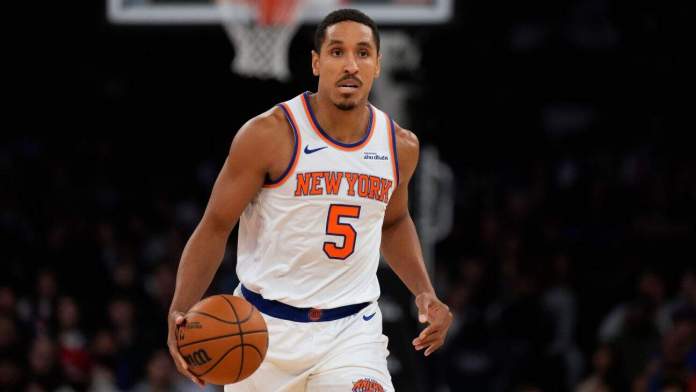
Malcolm Brogdon — known for his intelligence, leadership, and quiet consistency — announced his retirement from the NBA on Wednesday, October 15th, at the age of 32. The former Rookie of the Year and Sixth Man of the Year made the announcement through ESPN, closing the chapter on a nine-year professional career defined by steadiness and professionalism.
“Today, I officially begin my transition out of my basketball career… I have proudly given my mind, body and spirit to the game over the last few decades. With the many sacrifices it took to get here, I have received many rewards… I am deeply grateful to have arrived to this point on my own terms and now to be able to reap the benefits of my career with my family and friends. Thank you, from the bottom of my heart, to all who have had a place in my journey,” Brogdon said in a statement.
While Brogdon was still expected to make the New York Knicks roster this season, lingering injuries and a desire to move on led to his decision to step away. The veteran guard had struggled with durability in recent years, appearing in more than 41 games only once over the past four seasons.

Photo Cred: ESPN
Brogdon’s career was never flashy — but it was always solid. Drafted in the second round of the 2016 NBA Draft by the Milwaukee Bucks, he quickly made his mark as a cerebral, unselfish player who could do a little bit of everything. He captured the NBA Rookie of the Year Award in 2017, becoming just the second second-round pick ever to win the honor. Six years later, in 2023, he added the Sixth Man of the Year Award with the Boston Celtics — joining an exclusive club as one of only two players in league history to earn both accolades.
His contributions went beyond the box score. Brogdon brought poise, professionalism, and leadership to every locker room he entered — qualities that made him a respected voice among teammates and coaches alike.
Over nine seasons, Brogdon played for five different teams: the Bucks, Pacers, Celtics, Trail Blazers, and Knicks. His best statistical season came in 2020–21 with the Indiana Pacers, when he averaged 21.2 points, 5.9 assists, and 5.3 rebounds per game — career highs across the board.
He retires with 7,077 points, 2,156 assists, and 1,893 rebounds, numbers that may not jump off the page but speak to his consistency and versatility.
Though never a superstar, Brogdon embodied a rare blend of intellect, humility, and reliability — a player who always made the right play, asked for little spotlight, and earned universal respect along the way.
In a league often obsessed with highlight reels and headlines, Malcolm Brogdon was something refreshingly different: the most “okay” player ever — and one of the most admirable for it.
Sports Radio America - Where independent voices unite, stories flourish, and sports communities thrive through open dialogue between fans, journalists, players and coaches. All while making meaningful real connections.
Get important sports news delivered directly to your inbox and stay connected!
© Copyright 2026 Sports Radio America, a Tyayoku Studios Company. All Rights Reserved.