Home Blog Page 252

To Patch or Not to Patch

Ross D. Franklin/Associated Press
Photo Courtesy of Ross D. Franklin/Associated Press

It has been an interesting week in entertainment, media, and sports.  On the one hand, we saw Disney secure significant box office records, Netflix break ranks and sign a deal with SAF-AFTRA, and yours truly did a webinar on “Esports: the Differences between Entertainment and Sports dealmaking.”  Plus, we learned that a professional baseball player signed a “beard” clause.  We now may see baseball take on more logos for their uniforms in an effort to bring in additional dollars.  These brand partnerships are likely to be small and classy to begin, but may expand in the future. 

On a scale of measuring the visibility of brand partnerships on uniforms, at least in the United States, NASCAR (car racing in general), golf (PGA), and soccer (MLS) lead the way.  Basketball (NBA) follows with its second team specific brand partnership beyond the Nike “swoosh”, football (NFL) and hockey (NHL) are next, with baseball (MLB) bringing up the caboose or wagon, if you will.  However, Major League Baseball will be adding the Nike “swoosh” soon to their uniforms as part of a ten-year deal.  

To put the uniform patch into perspective, consider that the 2.5 inch or smaller area on the uniform brings in $5-20 million in revenue per year for teams.  Whether a uniform purist of not, that is significant income being left on table especially in a time where attendance is declining at MLB ballparks.  That being said, where people might be attending less games in person, viewership from home, phone, or tablet is likely to increase, and of course having sponsors to help pay for team operating costs is not something to dismiss outright when looking at the bottom line.   

Where do the leagues go from here?  Soccer in the United States already models Europe when it comes to across the chest marketing.  Will Major League Baseball follow the Korean and Japanese baseball leagues?  Unlikely for now where in those markets teams are literally named after the corporate sponsors/owners.  However, the question is always revenue sources.

Baseball and other sports leagues and teams in America take in significant revenue, at least currently, from television and streaming contracts, merchandise, and venue sponsorships.  The professional sports franchise foray into esports teams, international development, and sports betting will only bring in additional revenue.  As long as these revenues are supplying the cost, salaries, and profit of the franchises and leagues, the sponsorship avenue via the patch will be held back. 

Another approach has been with international development (games being played overseas to potentially jump start an international team or league and at the very least add more exposure and revenue).  What happens here is that American leagues and franchises are much more likely to utilize the more visible brand partnership model because the local populace is used to the exposure.  This happened recently in the London MLB Series between the New York Yankees and Boston Red Sox.  One thing is almost certain, any exploration with increased “patching” will be tested in the minor leagues first, much like time clocks, virtual umpires, and pursuits to speed up the game have been utilized. 

We can also expect that there will be moral limits on sponsors.  For example, alcohol and betting brands, and anything deemed to not to be kid friendly will be limited.  This is a good policy for young eyes, and old ones too.  Overall, the best approach may be one that keeps patch work small and classy.  There are other places to sponsor, and the uniform will prove to be a testy one.
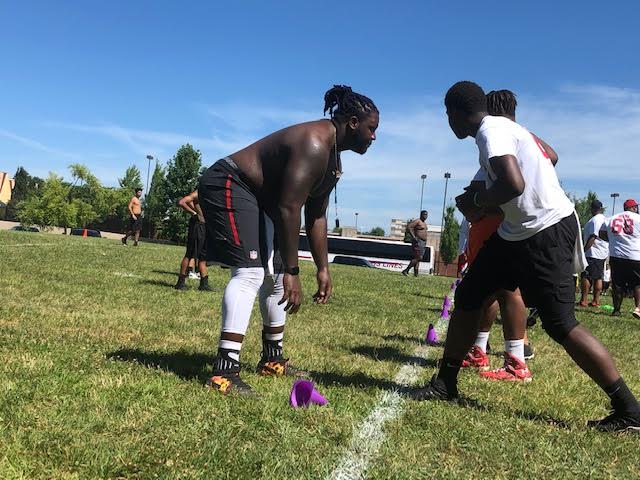
Jamon Brown gives back to Louisville

0
Photo courtesy of S.K. Patrick

Fans rejoice as football season slowly approaches.

Yet, before guard Jamon Brown takes the field for the Atlanta Falcons training camp, there was a promise to keep in his home city. Brown, who was drafted in the third round of the 2015 NFL draft by the then St. Louis Rams, attended Fern Creek High School and the University of Louisville.

It marked a great day for Louisville. A UofL product and current Atlanta Falcon, Brown treated aspiring football players from the community to a free football camp for children.

The camp, held at the Personal Fitness and Rehabilitation center, marked the third year of Brown’s event. As part of the program, participants enjoyed a skate and swim party. Buffalo Bills’ Keith Towbridge a former UofL tight end, was also in town to assist Brown.

“This was a part of my dream,” Brown said. “Not only making it to the NFL, but being able to give back and change some lives and I’m hoping I’m doing that.”

Not just a hoops town

Basketball used to be the most popular sport in the River City. Now, the pigskin is king. This summer, Micheal Vick and Chad Johnson held a camp. Beyond Brown, Reggie Bonnafon, another Louisville alumni and native, also held a football camp.

Indeed, Louisville has become a breeding ground for football. With UofL looking to return to it’s top 25 football form, more players and camps likely will be held for years to come.

One gets the impression that suits Brown just fine.

“Sometimes we get caught up because I’m on a national stage, that’s what gets a lot of national attention but really, anyone can do what I do,” Brown said. “I’m hoping to spread that amongst our community and hopefully that trickles down and it changes the world.”

5 Takeaways from The Fair Pay to Play Act

Matt Slocum / Associated Press
Photo Cred: Matt Slocum/Associated Press

If passed by the California Legislature, the Fair Pay to Play Act will allow student-athletes to hire an agent or attorney for their business deals, guarantee the same rights given to Olympic athletes, would prohibit schools in California from taking away scholarships or eligibility from college athletes who use their image and notoriety to make money, and would go into effect January 2023.

If passed, the NCAA, the National Collegiate Athletic Association, which is the nonprofit organization that regulates student-athletes from 1,268 North American institutions and conferences might challenge the law and disallow California universities from participating in NCAA sports. 

However, a few important notes about the NCAA that you might not know.  Its substantial funding comes from the trademarks and television rights that it licenses and sells to broadcasters and merchandizers for March Madness and the College World Series.  It has no other significant additional source of revenue and even that funding is shared with the member institutions, e.g., the universities who make the tournament.  The College Football Playoff is not a part of the NCAA and is a separate entity. 

Member institutions have budgets that cover many other items besides sports, but since television rights for college sports has skyrocketed, the budgets for athletic departments has indeed grown. 

Currently, student-athletes may speak with attorneys and agents, but they cannot accept anything of value, in the very broad sense of the term value, and cannot sign a contract.  Student-athletes can see university certified/approved advisors, but nothing on the lines of what this Act would do to open the field for business. 

There are five takeaways from the potential passage of this Act. 

1. What about student-athletes in California and other states? 

As the NCAA as alluded to in their response to the prospective legislation, it could prevent California universities like UCLA, USC, Stanford, Cal, Pepperdine, Cal State Fullerton, Cal State Long Beach, and SDSU from participating in the College World Series and March Madness because the pay for play rules go against existing NCAA’s rules.  Unless the NCAA and the California legislature come to a compromise, the aforementioned is a likely outcome.  However, the NCAA might be wise to strongly consider the California legislation as a model for the Country because it removes the pressure on NCAA member institutions from having to pay and gives the student-athletes options, or better said, a choice, and it is based on market-value not some academic or court-ordered formula (e.g., the O’Bannon case).  It would also be great press for the NCAA should they support the Act, something it badly needs now. 

2. What about minor league player development? 

This is where the professional sports leagues, particularly the NFL can do more.  The NBA has the G-League, but the NFL does not currently have an established minor league system or player development outside of its draft from the NCAA member institutions every year.  California legislation cannot solve a business or perception problem of the NFL, but the Act does help relieve some financial pressure on the student-athletes.    

3. Does the Fair Pay to Play Act go far enough or too far?

Surprisingly in a state that looks to constantly push the envelope in terms of a one-party dominated legislature, this Act is very fair and business savvy.  The point that the NCAA and its member institutions or conferences (Pac-12, etc.) are not required to pay, but only allow student-athletes to profit from their image based on market value is an engaging and fair deal. 

4. Money is important, but representation is more significant

This may be the most important aspect of the legislation.  Having the ability to profit off of something is different than the ability to execute it.  Imagine a horse without a jockey.  A race car without a driver or pit crew and crew chief.  Student-athletes need and deserve representation and the fact that it has been, even if unofficially, denied to them is the biggest travesty.  People need good advice and having a good agent or attorney in their corner will open up possibilities and remove the need for a black or gray market of services and gifts. 

5. What is amateurism going forward?  

Amateurism is the stage before becoming professional, whether in sports or likely something else in the pursuit of life and happiness.  The Act will help prep the student-athletes before entering full-time employment, raising a family, etc.  It allows for profit, but the schools are not paying for it so the students keep their status.  Having representation will allow good advice and decision-making to take its proper course.  The Olympic-model is something that has worked and should work well for student-athletes at NCAA member institutions. 

As for the future, it is quite possible that “As California goes, so goes the Nation.” 

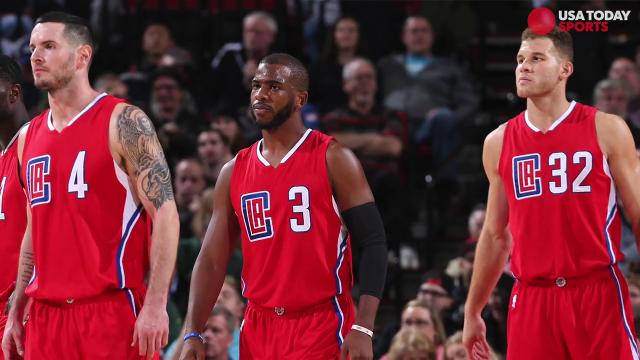
The New Kings of L.A.

Photo courtesy of USA Today Sports

 It was a wild week of free agency signings capped off by a league-shifting move of epic proportions. While Anthony Davis being traded to the L.A. Lakers was expected, the “Little Brothers” L.A. Clippers made a chess move to possibly become title favorites and the new Kings of L.A (sorry LeBron).

The NBA is wide open and the two, top contenders for next year’s title play in the same arena. This time last year, no one would’ve thought the words “Clippers” and “championship” would be mentioned in the same sentence. But, this free agency was unlike many others as nearly one-third of the league changed teams. Can the Clippers overtake the Lakers in Staples Center? Let’s see.

Los Angeles Clippers

The Kawhi Leonard sweepstakes had everyone waiting for his decision and what a decision it was! Somehow, literally in the dead of night, the Clippers made one of the most historic trades in league history. Shai Gilgeous-Alexander, Danilo Gallinari and five draft picks were traded for Paul George. With this star pairing of George and Leonard, the Clippers have the best two-way wing players in the NBA.

Moreover, the Clippers re-signed Patrick Beverley, arguably the best lock-down point guard defender. A sixth Man of the Year and monster comes off the bench with scorer Lou Williams and defensive powerhouse Montrezl Harrell.

This team should be among the top defenses in the league. They have the makings of one of the most feared defensive teams in recent NBA memory. Doc Rivers, a Hall of Fame coach, has the defensive pieces he had with the Boston Celtics. That combo resulted in two finals appearances and a title.

Los Angeles Lakers

While the Clippers dropped bombshells, The Lakers followed up by adding depth to their team. The pairing of Anthony Davis and LeBron James still gives the Lakers the better duo in the City of Angels. They also signed one of the best 3-and-D players left in free agency in Danny Green.

The most influential singing was DeMarcus Cousins to a minimum deal. If Cousins, (who’s currently training and not rehabbing this off-season) comes back close to his old self, the Lakers could have three All-Stars and a super-team on their hands.

The Lakers also re-signed solid Rajon Rondo, JaVale McGee, and Kentavious Caldwell-Pope, who all played well in spurts last season. This year, the Lakers acquired shooters, unlike last season, which mostly drew rim-attackers Quinn Cook, Jared Dudley and Troy Daniels.

The development of Kyle Kuzma will also be huge as he can ease the workload of Anthony Davis and LeBron if he takes the next step. James may start at point guard as he’s one of the elite passers, averaging more than seven assists per game in his career. A late signing of Avery Bradley allows for defensive pressure on Bradley when James is out.

5 Solutions to the Esports Industry Regulation Dilemma

(AP Photo/Mary Altaffer, File)
Photo Courtesy of the Associated Press (AP Photo/Mary Altaffer, File)

Turner “Tfue” Tenney is a popular esports gamer who was represented by Faze Clan, an esports representation organization.  Until Tenney filed suit against his former representatives for unfair business practices and a violation of the Talent Agencies Act (“TAA”), Faze Clan would take a percentage of Tenney’s endorsement deals and winnings from tournaments.  The relationship does not seem much different from a sports agency model for an athlete or an entertainment agency representing talent.  However, the lawsuit raises questions as to what law regulates representatives of esports gamers?

This article discusses five possible scenarios to assist in regulating representatives and protecting gamers in the esports industry. 

Start a Union

Unions have done some great things for labor, especially in the sports and entertainment industries where there is constantly a battle for leverage between management/ownership and the talent.  That leverage space is where dealmaking is at its very best where each party is always trying to move the needle in their direction.  However, unions are the not the answer to everything and of course individual athlete sports do not have unions and it is likely that many in that space would not complain since talent teams are allowed to secure deals according to their own understanding. 

Esports are a Sport and Gamers are Athletes, the Miller-Ayala Act applies

Normally in California, if you want to represent a professional athlete, you have to file a simple Athlete Agent Disclosure Statement and pay a small fee.  If you represent an athlete that plays in a league that has a union (NBAPA, NFLPA, NHLPA, MLBPA, or MLSPA) then you will have to generally take a test, fill out an application, and pay a fee.  Attorneys fall somewhere in legislative purgatory because they are licensed to practice law, but must also get an agency license and separate business if they want to represent talent for doing legal things like negotiating contracts, term sheets, drafting contracts, and, you know, dealmaking. 

Esports are Media and Entertainment, the Talent Agencies Act applies

Years ago, this nifty little legislative carve out, some would refer to it as a monopoly and restraint on trade, and possibly worse the unauthorized practice of law, the TAA was signed into law at the push of some in Hollywood who wanted more control and less competition in the industry.  Now, however, there are some terrific agents and leaders in industry who have been trusted and delivered on major deals for their clients.  It is also true that many agents graduated from law school and either decided not to practice law or practice law on a limited basis. 

Esports are something completely new, and “influencers” need a new regulation

What would an influencer law look it and who would it cover?  One argument is that influencers are entertainers and that the Talent Agencies Act applies especially where deals are procured for the gamer.  An argument that the sports agency rules apply would be a stretch at best unless the influencer was an athlete in some sport, but then the influencer would be an athlete who also does influencer promotions. 

Esports and the Entire Industry Needs a Revamp

The truth is the industry is changing.  The entertainment, media, and sports industries still have their industry channels and established content, but it is likely that a new model is needed.  The Tenney v. Faze Clan case is an example of the issues in entertainment and sports dealmaking in general: a lack of regulation and/or confusing and outdated regulation that favors the few.  

Improvement Opportunities

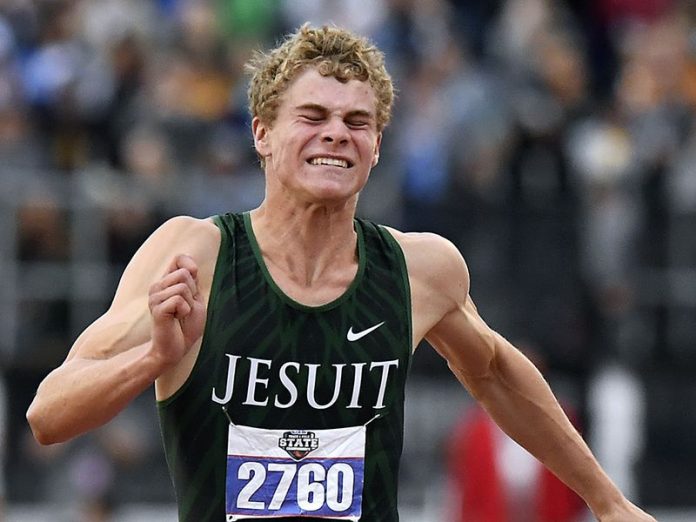
USA Today

Strake Jesuit High school senior Matt Boling is the Gatorade National Track Athlete of the Year.

“I have this ‘opportunity’ to run and so many people would want to be in this position,” the star sprinter said. “I try not to get nervous, but think of it as an opportunity.”

Ephesians 5:15-16 reads, ” Be very careful how you live – not as unwise but as wise, but making the most of every opportunity….”

Make the most of your opportunities to honor Christ this week!

The Last Frontier: Entertainment & Data

Image Courtesy of the Associated Press

The battle between data analytics and decision-making has always boiled down to an ethical one.  More precisely, data, information, and good analysis of the same helps to inform business leaders in their decisions, but can also be harmful as to the human element.  Where analytics are utilized in a complimentary fashion decisions can be made with less risk (or at least well-informed risk) with good information about potential outcomes. 

The entertainment industry, mainly because of its artistic nature, has somewhat fought against utilizing analytics and sharing analytics about consumer preferences and use.  The thought goes that where something created is subjective and pointedly artistic, data about what will and will not be successful with audiences should be challenged.  On the other hand, sports and other industries have utilized and equally challenged analytics as well. 

In baseball, several well-known free agents, particularly relief pitchers, were left unsigned until recently because the analytics and the collective bargaining agreement rules on draft picks encouraged teams not to sign those players before a certain date.  The players unions, much like the guilds in Hollywood, want to see their members working and getting paid.  The age-old battle between management and labor continues. 

However, the difference here is that both sides to the equation, talent and studio, franchise and player, have access to analytics and data.  A player can improve their swing or approach as much as a team can use the same data to sign or not sign a player.  A studio or streamer can look how certain content performs as well as how an actor does with audiences in certain genres.  Information helps with preparation and being prepared.  It allows decision-makers to make more well-informed decisions. 

Analytics should not be viewed in a vacuum, however.  If a player or actor, for example, gets along terrible with a certain manager or studio, or does not want to move or film in a certain city, or has character issues, those intangibles should be collected and measured as well.  People are not robots despite some making the argument that data turns them into such. 

Hulu’s dive into data and its public acknowledgement of such is key pivot in the entertainment industry.  Legendary Entertainment was once a pioneer, but has since backed off with a movie flop here and there.  Legendary did have some registered successes with data analytics and film-making as the Moneyball for moviemaking.  Netflix, known for being a leader in the streaming space and holding miles of data has more recently begun to share and utilize analytics and data with increasing competition. 

What is more, a leading actress (Kerry Washington) announced the move into data while discussing some of her upcoming projects for Hulu.  Disney’s near 100% ownership of Hulu also plays into what Disney can do to challenge the competition and enter the streaming space through data and analytics.  Washington is right, social media, consumer preferences, and data with analytical decision-making can help the entertainment production and distribution process.  Eventually, like in sports, entertainment studios, agencies, streamers, and talent will utilize data and analytics and separate themselves from the haves and have nots.  It is no coincidence that as the talent-content deals grow in dollar size, Netflix is utilizing its consumer-collected data to make such informed risk business decisions. 

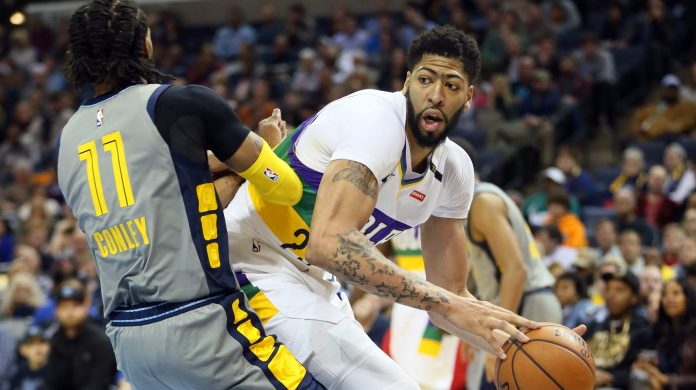
Anthony Davis trade rocks NBA

Photo courtesy of USA Today

The Anthony Davis trade has finally happened. The plan has been executed. This trade changes the landscape of the NBA.  Ever since Davis signed with Klutch Sports, the NBA world knew AD was looking to become a Laker.

Klutch Sports finally got their wish.  Davis and LeBron James will dawn the purple and gold next season. It was a steep price to pay, sending Lonzo Ball, Brandon Ingram, Josh Hart and three first-round picks to New Orleans. With Davis, it gives the Lakers a chance at a title.

But, the question remains how the Lakers will fill out their roster. While the Lakers might be looking at a third star, it might also be better for them to spread the wealth. Here’s a look at the best free agents to compliment the superstars. With the Lakers being in a position to retain Kyle Kuzma, they’ll still need two starting guards.

Asset Analysis

J.J. Redick

J.J. Redick is a sharpshooter James has always won championships with. Last season, he signed a one-year deal with the 76ers for $12.5 million. If the Lakers sign him, they’d have room to spare. He’s a high-level player who’s proven to be great in the playoffs.

Terrence Ross

Ross averaged 15 points per game last year on nearly 40 percent from the Land of 3. The Lakers’ lack of players who can shoot and get buckets was on display when James went out with injury. Ross is a great pick-and-roll player. With James being a ball-handler, Ross would free up LeBron to play off the ball.

Danny Green

Shooters shoot, and with James, that usually equals a championship run. This is a perfect fit for James and Davis. Green has helped the Spurs and Raptors win championships. He shot 45.5 percent from deep. On the defensive end, he can guard 1-3 and has a championship pedigree.

Darren Collison

Darren Collison provides strong point guard play. He’s one of the most underrated players in the league. Collison is a gritty point guard who would be an upgrade from Rondo, who shot 40 percent from 3 last season. The Lakers would lose nothing with Collison on the defensive side.

Spur of the moment: Parker’s retirement marks end of era

Photo courtesy of USA Today

One of the greatest San Antonio Spurs of all time has given his curtain call, marking the true end of an era. “The Frenchman,” Tony Parker, announced after 18 years, he’s calling it a career.

And what a career it was! Parker was a six-time All-Star and the Spurs haven’t missed the playoffs for the better part of two decades. For the most part, they had one floor general leading their remarkable run.

The French Connection

A diamond in the rough, Parker was selected 28th overall in the 2001 NBA draft and helped carry the team to unparalleled success.   During his tenure, he averaged 15.5 points, 5.6 assists and 2.7 rebounds.

His only season with another NBA team was 2018-19 with the Charlotte Hornets under former Spurs assistant coach James Borrego. Parker is the final of the Spurs’ “Big 3” comprised of Tim Duncan and Manu Ginobili to retire.

That trio will be in the Hall of Fame sooner rather than later. Originally, Parker wanted to stay in San Antonio and play 20 season with one team, however things changed.  

“A lot of different stuff ultimately led me to this decision,” Parker said. “But, at the end of the day, I was like, if I can’t be Tony Parker anymore and I can’t play for a championship, I don’t want to play basketball anymore.”  

Parker was one of the best point guards during the prime of his career. The second option to Tim Duncan, he stamped his own legacy as possibly the best French-born player to compete in the NBA.

Helping guide the Spurs to four championships, he joins the Hall of Fame alongside Dwayne Wade and Dirk Nowitzki as first-ballot selectees.    

For any other backup point guard, Parker’s numbers of 9.5 points in 17.9 minutes per game with the Charlotte Hornets would’ve been a great season.

But, when you’ve been one of the best, average is not an option. Now, Spurs fans await Parker’s eventual jersey retirement and their last chance to celebrate the Big 3 together.  

Content Streaming Competition by the Numbers

Images Courtesy of the Associated Press (Apple: Tony Avelar/AP)

With more competition arriving, Netflix subscriptions will undoubtably fall (by 49%) with the entrants of Disney+, which now owns the FOX entertainment assets and soon to be 100% of the Hulu platform through a deal with Comcast/NBCUniversal.  Apple+, WarnerMedia, and Amazon are also competitors.  There are four reasons Netflix will face stronger competition in the coming months.      

1. More Streamers

Disney+/Hulu, AT&T/WarnerMedia, Amazon, Apple+, and potentially others like DAZN and FloSports.  Comcast/NBCUniversal has also yet to enter the streaming space with its own streamer.

2. Loss of Licensed Content on Netflix

Due to expiring licensing deals (e.g., Disney and Marvel properties and eventually the FOX assets to Hulu), plus other streamers who enter the space. 

3. Netflix Originals

The streamer did not make many of the popular originals and now must produce and develop more of its own content versus licensing owned-properties. 

4. The “Go it Alone” Approach

Netflix chose not to integrate with Apple+ because it sees Apple as a direct competitor.  Disney did the same when it decided not to continue licensing its properties to Netflix late-2019.  Disney also owns 66% of Hulu and will likely purchase the remaining 33% from Comcast/NBCUniversal by 2024.  Where Disney’s family-friendly content and FOX’s adult content cannot be on the same platform, Hulu will be the place for sports and the Disney-owned FOX content.  The lack of cooperation and new entrants will lead to more competition like the cable and satellite companies of old.  This may also lead to lower revenues.

Depending on whether consumers view Hulu and other streamers as a substitute, complimentary, or independent streaming service compared to Netflix, consumer subscriptions will be at risk.  Disney will own and control two major streaming platforms by 2024 (Hulu and Disney+), not to mention ESPN+ and ABC.  Netflix will be raising its prices to $13-16 per month.  Hulu is already cheaper than Netflix, as will be the Disney+ platform ($6.99 per month).  Apple+ will be $5 a month.  Amazon is $9 a month.  Hulu is free for Sprint customers and is bundled in other deals for students (Hulu, Showtime, and Spotify Premium for $4.99 a month).  Until AT&T figures out HBO pricing, the WarnerMedia streamer pricing is unknown.  Interestingly, Netflix prices around the world vary significantly.      

Disney has a massive content library, and with FOX, that much more.  Disney will be able to put price pressure on Netflix through its platforms and decrease demand where it offers great content for less.  Consumers cancelling their Netflix subscriptions may be a concern when Disney+ and Apple+ go live since the two together with free Hulu will likely include more content than Netflix and for the same price.  Amazon also has an advantage because Prime includes ecommerce benefits and is still welcoming in its practices of licensing content. 

Netflix is an innovative company, however, and may take the following approaches to keep up with the competition.  Here are three things Netflix needs to do to retain its market share and mitigate the loss of their pricing power.

1. Add more Content 

Netflix must keep up with the Joneses.  This could be done through live and classic sports content and/or continuing to pay high fees for licensing other studio content.  Netflix needs to be the one stop shop for all content like Amazon is to ecommerce. 

2. Look at Purchasing a Studio(s)

Lionsgate and smaller studios to own the content libraries.  Netflix and Paramount have already entered into a multi-movie deal. 

3. Look at Exclusively Licensing another Studio(s) Content

Comcast/NBCUniversal just purchased Sky News in the UK.  NBCUniversal has a massive entertainment library.  Comcast/NBCUniversal does not have a streamer and is about to give up its 33% control in Hulu.  Seems like a prime relationship, pun intended.  Viacom is looking at combining with CBS.  Maybe some synergy there.  New FOX is not looking at creating a streamer, but maybe their sports and news content would find a home on Netflix. 

Netflix has already begun purchasing movie theaters to control the entire distribution model, raising questions about how the United States Justice Department might view the matter.  Congress members on both sides of the isle are already circling the wagons while looking at the tech giants, while entertainment companies have done far more mergers and acquisitions of each other.  This likely also helps their awards season push by controlling the venue.  It could also be a liability.  

Netflix is the largest streamer by the subscription numbers, but challenges await.