

On Monday, the Senate passed the bipartisan bill, Protect College Sports Act, in a sweeping 77-22 vote. The bill’s enactment is led by Senators Ted Cruz (R-Texas) and Maria Cantwell (D-Wash.). The intention of the bill is to end the chaos and uncertainty that has amassed in the NCAA since the first NIL ruling was made. With the Senate’s majority vote, the bill moves onto the House. If it passes, it will then proceed to President Trump’s desk for his final approval.

The bill was originally introduced in May 2026 and has since seen many amendments to it. Including narrowing the language that will prevent colleges from being able to circumvent the cap. It will indirectly limit paying athletes through sponsors or media rights partners. This led to the support of the SEC and the Big 10. The bill covers a variety of areas in college sports that have lackluster rules.
Those include NIL, revenue sharing, protecting women and Olympic sports, and, most importantly, the transfer portal. For NIL, the bill creates one federal law regarding the contents and what contributes to NIL. It puts an end to the little patchworks that have been done on a state level. Instead it gives the whole nation one rule that all schools must follow. One of the biggest things the bill addresses is the transfer portal.
Originally introduced in 2018, it has seen major changes to arrive at the point. Right now players leave schools as they please and as often as they like. The bill reverts back to a previous NCAA structure of one free transfer where the player can immediately begin playing. In addition, transferring after that would result in a player sitting out of the season for one year. However, it does include protections in the circumstances of a head coach change, discontinuation of a sport, or any misconduct-related incidents.
For the schools, the bill will add more money to their revenue-sharing cap, which will result in about a $50 million cap per year for athletic departments. It adds on a $22.5 million “retention fund” to keep current players and $5 million for women’s and nonrevenue sports. However, the bill is not without detractors, including labor groups, athlete organizations, the NAACP, and 22 senators.
One concern lies in the power the NCAA will be gaining over college sports and the athletes. Especially after the athletes have begun pushing back against their old practices that exploited generations of athletes. They see the bill as favoring institutions instead of the people and limiting the negotiation power student-athletes have. While the bill specifically states its neutrality on the premise of student-athletes being employees or not.
The protections it offers to the institutions and NCAA mimic that of professional sports leagues, which maintain a collective bargaining agreement. An agreement is made between the institutions and the players, outlining the rights and services of both parties. As of now, without an official stance on student-athlete employment, they have no grounds for a bargaining agreement.
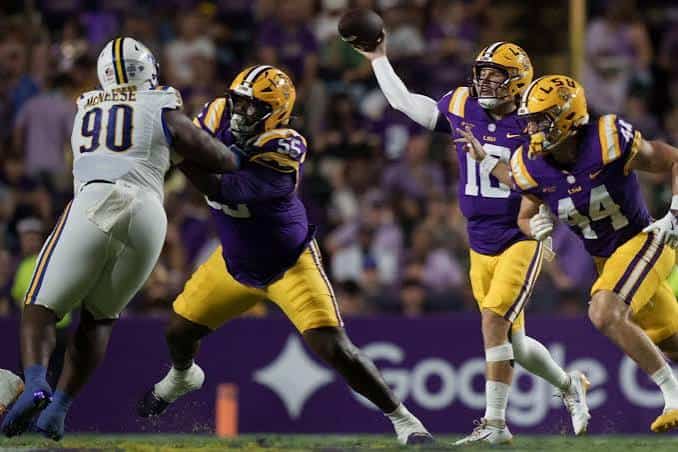
Photo Cred: Taking Vegas
Currently, the bill will be waiting for the House to reconvene, which will occur in over a month, after the midterm elections. So, the bill will remain up in the air as only a possibility. People will decide if they think the bill is a good thing for college sports or still requires a lot of revisions before it should become law.