



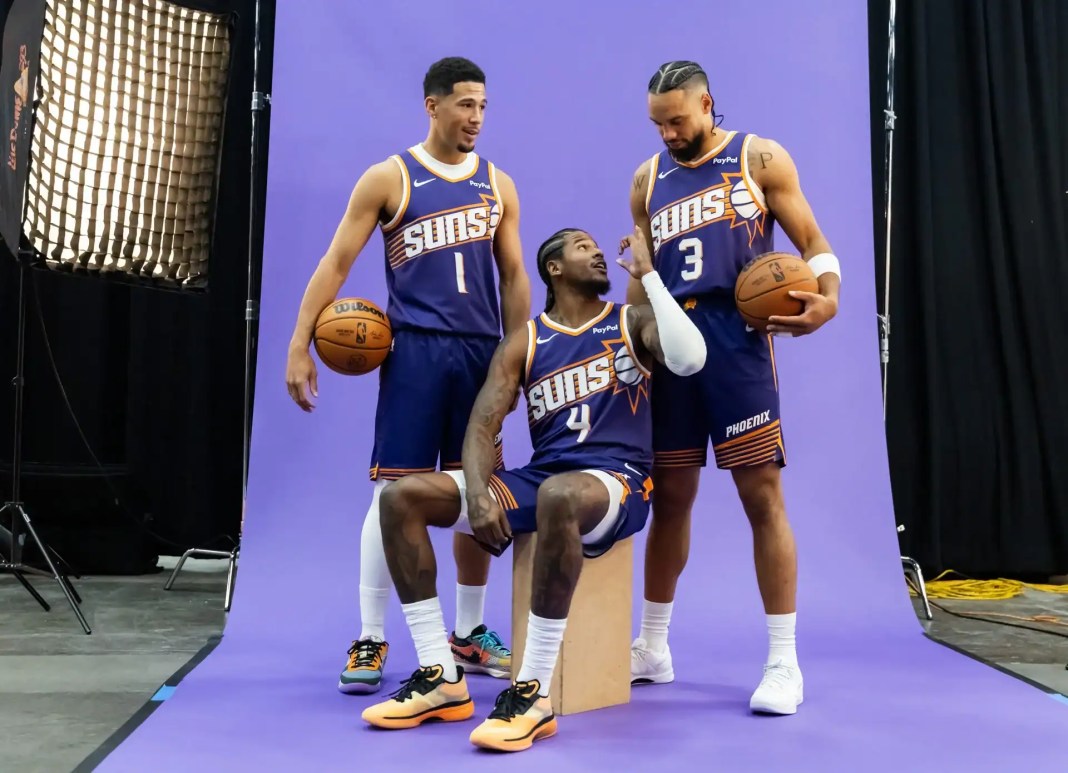

The Phoenix Suns are starting the season stronger than most anticipated in a tough Western Conference, sitting at 14–11 and holding the No. 7 seed. This early success is a breath of fresh air for an organization coming off a stretch of poor and questionable management decisions. While most teams with this start would feel optimistic heading into trade season, Phoenix may be trending in the opposite direction.
The Suns entered a bleak phase of their franchise after committing fully to a “win-now” strategy with the acquisition of Kevin Durant in early 2023. The deal cost them three key contributors from their championship run, along with four first-round picks and a pick swap. When it became clear Durant alone couldn’t push them over the top, they doubled down that offseason—moving Chris Paul, six second-round picks, and four first-round pick swaps for three-time All-Star Bradley Beal. In hindsight, this sequence of moves has become one of the most heavily criticized roster decisions in modern NBA history, especially given Phoenix parted ways with Beal just two seasons later.

Photo Cred:Bleacher Report
Now, with the franchise firmly in the present day, optimism is hard to find. After trading for Mark Williams, the Suns won’t control their own first-round pick until 2032, sacrificing two more first-rounders in the process. These moves have stripped the organization of flexibility—limiting their ability to reshape the roster through the draft and leaving them reliant on the current group. As the trade window nears and media outlets roll out mock drafts, few scenarios provide a realistic escape from Phoenix’s current predicament.
Several Suns players are playing some of the best basketball of their careers, giving them strong trade value if the organization chooses to sell. The problem is that many assume Phoenix will be buyers, not sellers—seeking talent instead of assets. The Suns didn’t expect this roster to mesh as well as it has, and some now believe this group could form a new playoff core. But that optimism took a major hit after a 49-point loss to the defending champions, exposing just how underdeveloped the roster still is.
The most sensible approach for Phoenix during the upcoming trade window is to sell and recoup assets. Committing to this direction would allow the Suns to build through the draft, prioritize youth, and move on from players unlikely to contribute meaningfully to a future championship run. It forces a tough decision: several key role players are peaking in value right now. Some could help push Phoenix to heights not seen since 2021, but waiting too long risks their value declining—and missing out on critical opportunities.
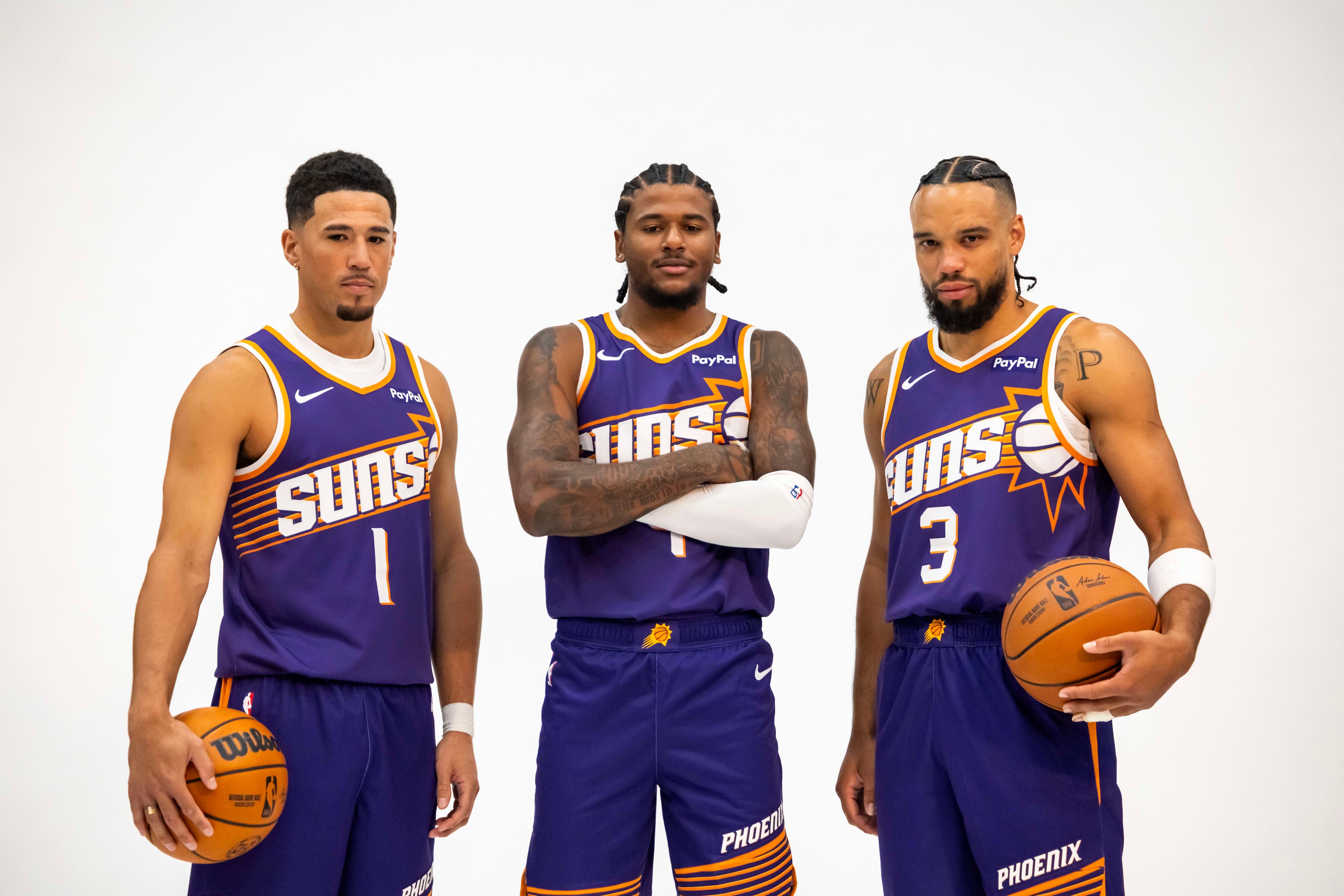
Photo Cred: Hoops
The Suns never expected to be competitive this season, given they’re still in year one of their rebuild. And although they’ve exceeded expectations, few believe this level of play is sustainable. The NBA is full of fluctuations, and buying without evidence would be unwise. With Devin Booker under contract through the 2030 season, Phoenix has time to let this rebuild unfold naturally.
Trade Block
Grayson Allen:
Over the last three seasons, Allen has solidified himself as one of the league’s top three-point shooters while providing strong defense. His evolution into a versatile offensive player—capable of elite floor spacing, attacking off the dribble, and finishing at the rim—makes him a valuable asset. Moving him to a contender could bring Phoenix meaningful draft capital and help form a younger core.
Dillon Brooks:
Brooks is having a career year across multiple categories, proving himself to be a strong third option on a contender. After two rough seasons, he has reignited energy within the Suns and brought a new culture to the locker room. He holds the most trade value on the roster, and moving him could set Phoenix up extremely well for the future.
Royce O’Neale:
O’Neale has boosted his efficiency on both ends, shooting around 40 percent from three and offering reliable defense. His value is near its peak, making this an ideal time to move him while opening the door for younger players to develop.
Nick Richards:
Set to become a free agent this offseason, Richards has gradually fallen out of Jordan Ott’s rotation. Keeping him as insurance behind Mark Williams made sense, but it has also limited lottery pick Khaman Maluach’s opportunities. Trading Richards would free up developmental minutes and further commit Phoenix to a youth-driven direction.