


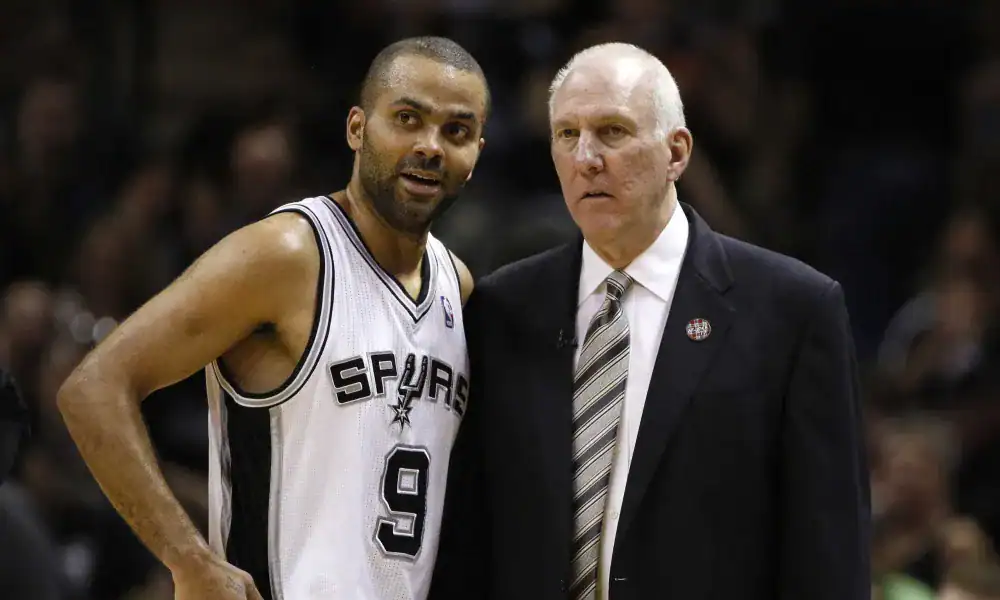

Gregg Popovich is more than a coach — he is an institution. Widely regarded as one of the most accomplished and influential figures in NBA history, Popovich’s name has become synonymous with sustained excellence, disciplined basketball, and a culture that prioritized integrity as much as victory. Over nearly three decades with the San Antonio Spurs, he built not just a dynasty, but a blueprint for how a franchise can succeed with consistency, humility, and purpose. Popovich’s résumé is staggering.

Photo Cred: USA Today
He holds the NBA records for both most regular season wins and most playoff victories, milestones that speak to his long-term mastery of the game. Under his guidance, the Spurs captured five NBA championships (1999, 2003, 2005, 2007, and 2014), each representing a different phase of the team’s evolution but always unified by the same core principles: teamwork, preparation, and unselfish play. What makes his record even more impressive is the era-spanning nature of his success. From the grind-it-out games of the late ’90s to the pace-and-space era of the 2010s, Popovich adapted his strategies without ever compromising the identity of the team.
During his tenure, the Spurs achieved winning records against every other NBA franchise — a testament to his consistency and competitive edge. Perhaps the most telling measure of Popovich’s greatness is his consistency in a league known for its volatility. Across 29 seasons, he led the Spurs to 22 winning campaigns and nearly annual playoff appearances. While rosters changed, stars aged, and the league evolved around him, Popovich remained the steady force behind one of the most stable and respected organizations in professional sports.
His success wasn’t built on star power alone—it was grounded in culture. Popovich cultivated a selfless, team-first environment where discipline was expected and egos were checked at the door. That culture turned San Antonio into a destination for players who valued winning the right way. Popovich’s legacy reaches well beyond Xs and Os. He was instrumental in the development of future Hall of Famers like Tim Duncan, Manu Ginobili, and Tony Parker—players who defined the Spurs’ golden era and whose games blossomed under his mentorship.

Photo Cred: WJLA
But his influence extended even further: role players thrived in San Antonio’s system, often playing the best basketball of their careers. Moreover, his coaching tree is among the most influential in the league today. Former assistants and players have gone on to lead teams across the NBA, many citing Popovich’s leadership, values, and basketball philosophy as cornerstones of their own approach. Still, the debate over whether Popovich is the greatest coach of all time is not without its complexities.
Some critics point out that much of his success came in a pre-analytics, pre-three-point-revolution NBA. Today’s game is faster, more perimeter-oriented, and positionless—factors that some argue would challenge the systems he once mastered. Additionally, Popovich benefited from something increasingly rare in modern pro sports: organizational stability. With a unified front office, consistent ownership, and long-tenured stars, the Spurs were uniquely equipped for long-term success.
Critics suggest this environment, while not taking away from his brilliance, may have given him an advantage over peers coaching in more turbulent settings. Popovich’s accomplishments extend beyond the NBA. As head coach of the U.S. men’s national basketball team, he led the squad to a gold medal at the 2020 Tokyo Olympics, reaffirming his ability to command the respect and performance of the game’s best players on the international stage.

Photo Cred: WDIO
In 2023, his contributions to the sport were immortalized with his induction into the Naismith Memorial Basketball Hall of Fame — an honor that not only recognized his on-court achievements but also his impact on the broader basketball community. In 2025, after 29 seasons on the sidelines, Popovich stepped down as head coach of the Spurs, closing a monumental chapter in NBA history. He transitioned into a new role as president of basketball operations for the franchise he helped define.
Even off the court, his influence on the game and the organization he shaped will continue. Whether Gregg Popovich is the greatest NBA coach of all time may forever be up for debate. But what cannot be disputed is that he redefined what greatness looks like in professional basketball. With unmatched longevity, unmatched humility, and a legacy that has changed the sport both on and off the court, Popovich stands not just among the greatest — he stands apart.