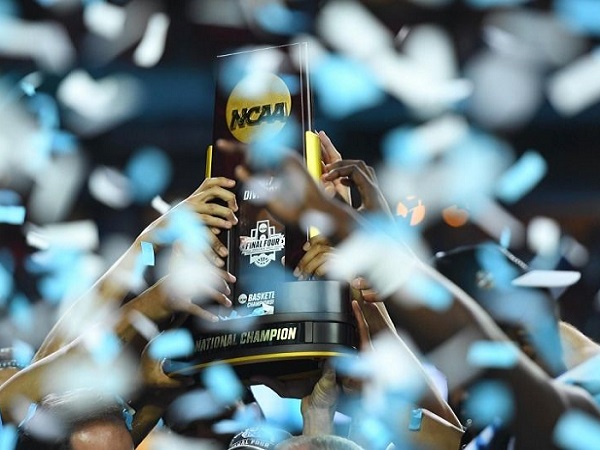




The college football season has sadly come to an end, and it wrapped up with Ohio State defeating Notre Dame in the National Championship of the inaugural twelve-team playoff. This matchup would have never happened without the expanded playoff, as both teams were ranked outside of the top four—an outcome that wouldn’t have been possible in the past ten seasons, which featured a four-team playoff. Fans got what they wanted with the expansion of the playoffs, as the 5th and 6th ranked teams in previous years often made a strong case for why they should have been included.

Photo Cred: SI
However, with more teams now eligible, there are even more squads arguing they deserved a spot. When the twelve-team playoff format was announced, it seemed simple: The five highest-ranked conference champions automatically qualify, with the four highest-ranked teams receiving a bye. The remaining spots are filled by the next best teams—seven at-large teams, and the fifth highest-ranked conference champion, which was assumed to be a Group of 5 team. More teams in the field, plus home games hosted on campuses in December, seemed like a win for fans.
However, once the season began and the playoff rankings were revealed, flaws in the seeding became apparent. Fans expected the Big Ten, SEC, ACC, and Big 12 champions to earn the byes, but as the season progressed, weaker teams in the Big 12 and ACC began to look like potential bye recipients. Even a Group of 5 team, Boise State, was in the running. Meanwhile, blue-blood programs like Notre Dame and Texas—both ranked in the top 5—did not secure a bye. They were still in the playoffs, but the seeding completely reshaped the bracket, with weaker teams being ranked higher than some of the top teams in the Big Ten and SEC.

Photo Cred: USA Today
Take, for example, the No. 1 seeded Oregon Ducks, who earned a bye but were set to face the winner of a game between Ohio State and Tennessee, both of whom had been ranked in the top 10 for most of the season. Meanwhile, teams like Texas and Penn State, who also finished the regular season in the top 5, didn’t earn a bye and instead faced an easier path in the bracket. Despite finishing in the top 5, they were jumped by teams like Arizona State and Boise State, who spent much of the season unranked or outside the top 10. As a result, Penn State’s road to the semifinals included matchups with SMU and Boise State, while Texas had to go through Clemson and Arizona State—both games where Penn State and Texas were heavily favored.
On the flip side, Oregon, as the No. 1 seed, found itself as an underdog in its first game against Ohio State. I’m not suggesting that playoff seeding should be based on betting markets, but it was clear that these teams had more favorable paths to the semifinals. In theory, giving the four highest-ranked conference champions a bye seemed like a good idea, especially given that, in most years under the four-team playoff, there were usually three or four conference champions. But conference realignment has changed the public perception of the value of a conference championship, with some conferences seen as much stronger than others.
Personally, I think the first year of the twelve-team playoff was a success overall. Teams played meaningful football games well into December and January, and the opt-outs that plagued New Year’s 6 Bowls in years past were no longer a concern. In prior seasons, players like Ohio State’s Marvin Harrison Jr. and Kyle McCord would have skipped out on playing in a bowl game to prepare for the draft or transfer. With the twelve-team playoff, there were no major opt-outs among starters. While some players still entered the transfer portal, it wasn’t the core players of the teams involved in the playoff, which kept the integrity of the games intact.
The issue, however, was with the seeding. Fans got the games they wanted, but they didn’t always get the competitive matchups they hoped for in the early rounds. The committee can’t control how a team plays, but many of these blowouts were easily predicted. One key change I’d suggest is to eliminate automatic byes for the top four ranked conference champions.

Photo Cred: Sporting News
Instead, the top four ranked teams—regardless of conference—should get the byes. This wouldn’t exclude teams like Boise State or Arizona State; they could still make the twelve-team field, but they would be seeded lower. The five highest-ranked conference champions should still make it, but the seeding should be based purely on the rankings of the committee’s top 12 teams. If a conference champion is outside of the top 12, they bump out the 12th ranked team, similar to how Clemson bumped Alabama out this season because they won the ACC.
This is just the first year of the twelve-team playoff, so I’m sure changes will be made to the seeding format, though it’s unclear when that might happen. There are also talks of expanding the playoff to 14 teams in 2026, which would significantly alter the bracket. If that happens, will the Big Ten and SEC receive more bids? Or could we see two Group of 5 teams make it into the field? Only time will tell, as college football fans eagerly await the next season’s kickoff in August.