



The T20 Cricket World Cup is now in its sixth day, with action across 12 games so far. Starting off the tournament, we saw a repeat of the first recorded cricket game in the history of the sport. Thunderstorms affected the weather in the days prior, and there was some trouble selling tickets. Nevertheless, a crowd of 6,000 fans gathered at the Grand Prairie Stadium in Dallas, Texas to watch a North American rivalry unfold on the cricket pitch. Fans of all ages and backgrounds cheered on the American and Canadian squads.
Both teams are a melting pot of various nationalities and backgrounds. American flags and colors filled the stands, alongside India and Pakistan jerseys. Many South Asian Americans showed off their love for the game, even for the USA national team! Rival Canadian fans also appeared in significant numbers, and the diversity of the players and spectators highlighted the game’s global appeal. Even then, the game had a uniquely American atmosphere to it, with chants of “USA” echoing throughout the crowd.
Milestones Hit, Records Broken
For the first time, America proved its cricketing might to the world. They chased down an impressive 194 runs from Canada, signaling to the rest of the group that they shouldn’t be taken lightly. Aaron Jones was the star of the June 1 evening, scoring 94 runs not out. His 10 sixes were the joint second-most in T20 World Cup history, trailing only the legendary West Indian Chris Gayle. He was rightfully awarded Player of the Match for his outstanding performance.
Canada scored 194/5 in 20 overs, but the US chased it down in 17.4 overs with a score of 197/3. This marked the third-highest T20 World Cup run chase. The match also witnessed the US’ highest T20I partnership as well. Andries Gous and Jones amassed 131 runs off 58 balls. Jones reached his 50 in just 22 balls, the fastest-ever by any American. Notably, the US set a new record for the fastest century partnership in any Men’s T20 World Cup game, achieved in just 42 balls.
First Innings
Canada Did Not Back Down
It appeared Canada’s strategy was to attack from the outset. Only two of their seven batters on Saturday night had a strike rate under 100. Openers Aaron Johnson and Navneet Dhaliwal accumulated 43 runs off the first five overs of their innings. After Johnson’s dismissal, Dhaliwal picked up the pace following a slow start. Nicholas Kirton (51 off 32) and Dhaliwal (61 off 44) then formed a crucial 62-run partnership, emerging as the team’s top scorers. Even after losing four wickets, wicketkeeper Shreyas Movva and Dilpreet Bajwa maintained the run scoring. Movva, previously averaging 13.67 with a strike rate of 102.50, delivered his career-best T20 performance. His 16-ball 32 not out, alongside Bajwa’s 5-ball 11, concluded Canada’s innings at 194/5 in 20 overs.
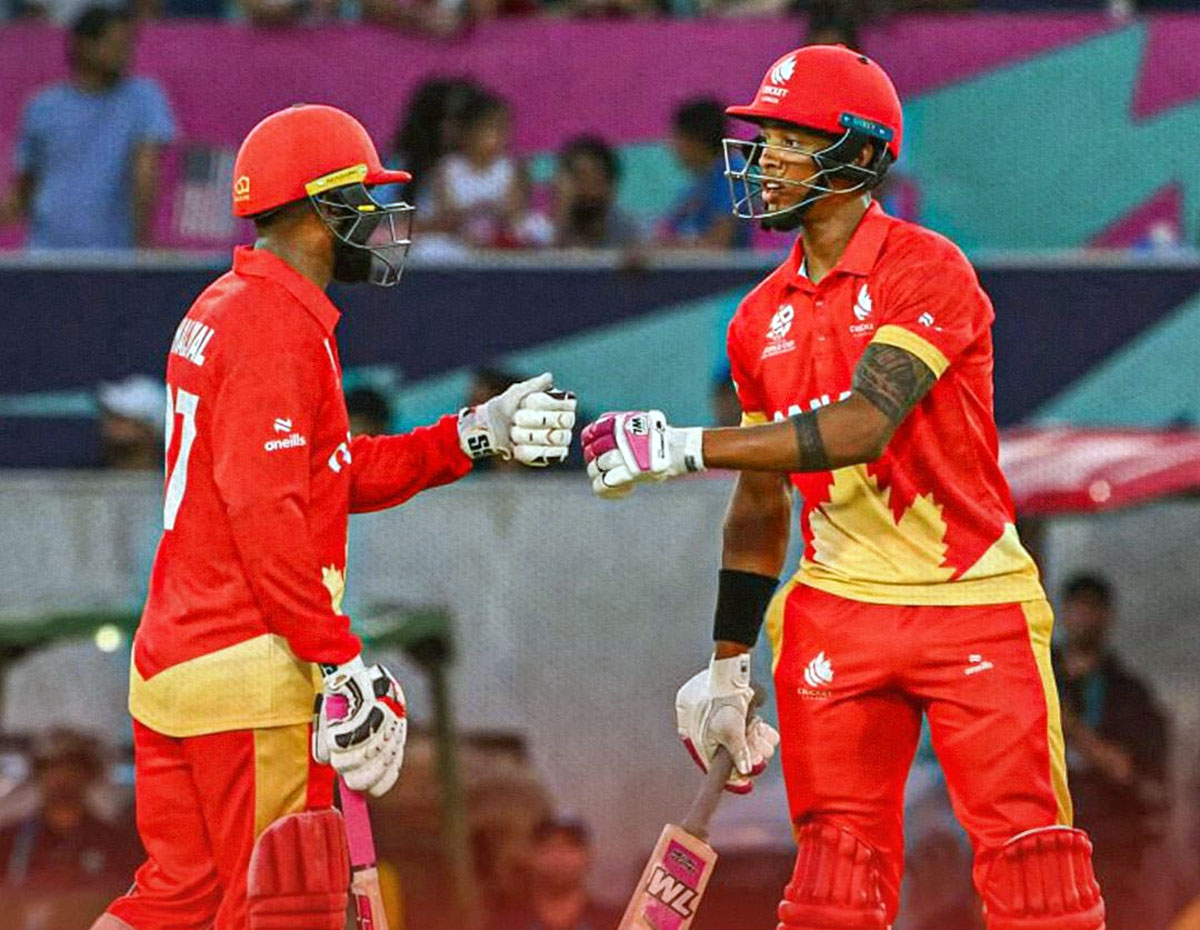
Photo Cred: Rediff.com (L- Dhaliwal, R- Kirton)
The US’ Fielding Was on Point…
The American effort on the field kept fans’ hopes alive. Steven Taylor started by stopping a surefire four by Dhaliwal to end the fourth over. Jasdeep “Jessy” Singh effected a runout four overs later to remove Pargat Singh after a brief stay at the crease. Captain Monank Patel had a stumping opportunity that could have removed Dhaliwal even earlier. Aaron Jones made a diving effort to end the 14th over, keeping a possible Kirton four to only two runs. Though two runs were scored on the last ball of the 17th over, the fielder made a fast throw to hurry the runners.
Gous, a South African-origin player, almost removed Shreyas Movva before his run rampage started. He was a little late tracking the ball in the air, resulting in a missed catch opportunity. Former US captain Steven Taylor managed the second American runout on the field, removing Bajwa to end the 19th over. Patel was on the receiving end of both successful attempts, successfully whipping off the bails each time.
…but the Bowlers Need to Be Better
Ali Khan, usually a star bowler for the US, struggled in this game. He conceded an expensive 41 runs in four overs (10.25 economy). He did, however, manage to remove the dangerous Kirton at a time when the run rate was dropping. In the field, Khan had a misfield that allowed an extra run to the Canadians.
Former New Zealand star Corey Anderson was dynamic in the first innings. His experience proved valuable as he took the wicket of Navneet Dhaliwal on his first delivery. He nearly dismissed Movva in the same over, fielding a ball off his own bowling and hitting the stumps. However, Movva safely reached the crease at the non-striker’s end despite Anderson’s effort. Anderson’s three overs ended at 1/29 (9.66 economy), and he also caught Kirton off Khan’s bowling.

Photo Cred: IndiaToday (L- Kirton, M- Anderson, R- Dhaliwal)
Indian-born spinner Harmeet Singh was the standout US bowler, with figures of 1/27 in four overs (6.75 economy). Jessy Singh and Saurabh Netravalkar (another former USA captain) both had economy rates of 8.00, helping to control the game. Steven Taylor’s one-over part-time off-spin had a rough start, but he limited the Canadians to three runs off his last three balls after conceding two sixes. Shadley van Schalkwyk, also originally from South Africa, finished with figures of 0/34 in three overs (11.33 economy) after a decent first over that went for six runs.
Second Innings
Canada’s Relentless Pursuit Continues
Canadian top bowler Kaleem Sana opened the second innings by dismissing Steven Taylor lbw (leg before wicket). It was a dream start for the Maple Leafers, who managed to limit the US to only 10/1 in two overs. Gous and Patel struggled to connect with the ball early on. While Sana’s second over went for 14 runs, USA did not fully awaken until the ninth over. Up to that point, they were teetering at 48/2 in eight overs. The eventual pair that formed a third-wicket century partnership, Gous and Jones, struggled to have a strike rate above 100. Patel was removed for a-run-a-ball 16 by Guyanese-origin player Dilon Heyliger.
USA Lets Loose!
Despite all the pressure that Canada placed, 33 runs off the ninth and 10th overs brought the Americans almost level with Canada’s position after 10 overs. Andries Gous and Aaron Jones then ramped up the pressure, scoring 10, 15, and 20 runs in the next three overs. This was just a prelude to what followed. The pressure intensified in a crucial 14th over, where Guyanese-origin player Jeremy Gordon made a series of mistakes.

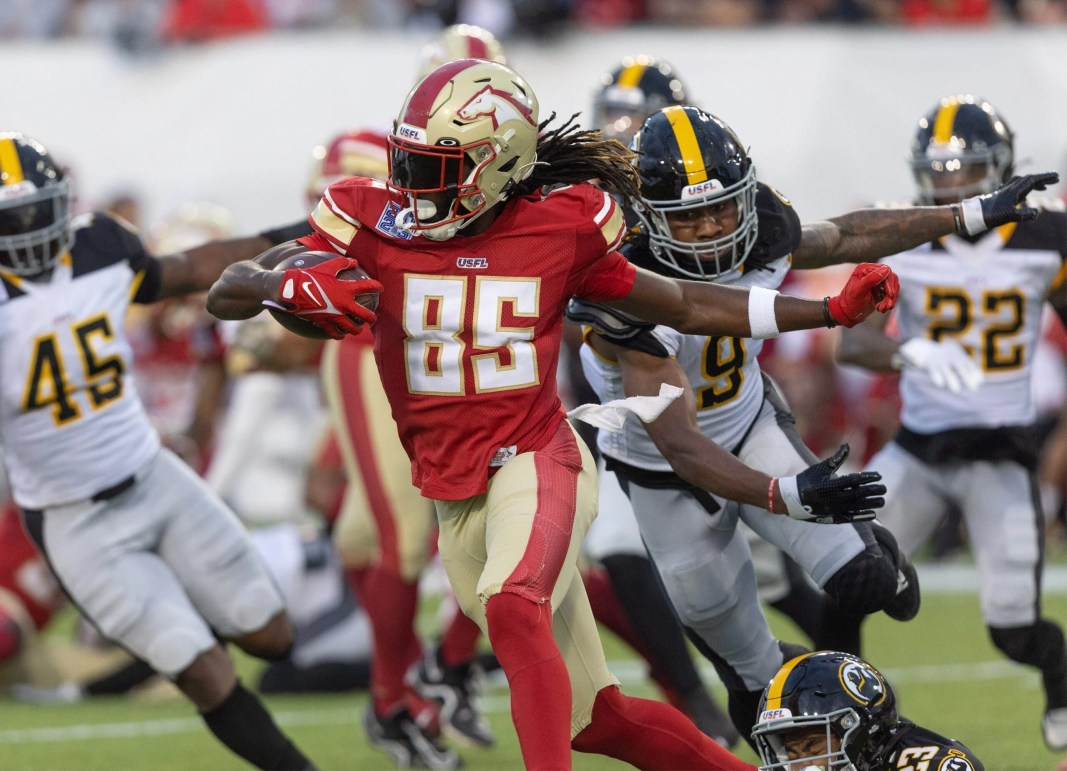
Photo Cred: NDTV Sports (L- Gous, R- #85 Jones)
In total, Gordon allowed a whopping 33 runs! Three wides and two no balls resulted in five extra balls and six extra runs. Three sixes and two fours were also struck, propelling Gous and Jones to 64 and 63 runs respectively. What’s more shocking about this unexpected turn of events was that Gordon had a solid first two overs, conceding only 11 runs. That was the turning point the Americans needed. What once was 69 runs required off 42 balls became only 36 runs needed off 36 balls! Jones finished just six runs away from triple figures (hitting a 40-ball 94), and Gous eventually departed for 65 off 46.
Canada Will Have to Do Some Soul Searching…
Kaleem Sana may have wrapped up his four overs by picking up a wicket and only allowing 34 runs, but his colleagues weren’t as fortunate. Gordon wasn’t brought back after that fateful 14th over, ending with figures of 0/44(3). Captain Saad Bin Zafar basically faced a similar fate. After only giving up nine runs in his first two overs, he conceded 33 in the next two to finish 0/42(4). Just like Steven Taylor was asked to bowl an over, Pargat Singh yielded 15 runs off his off-spin.
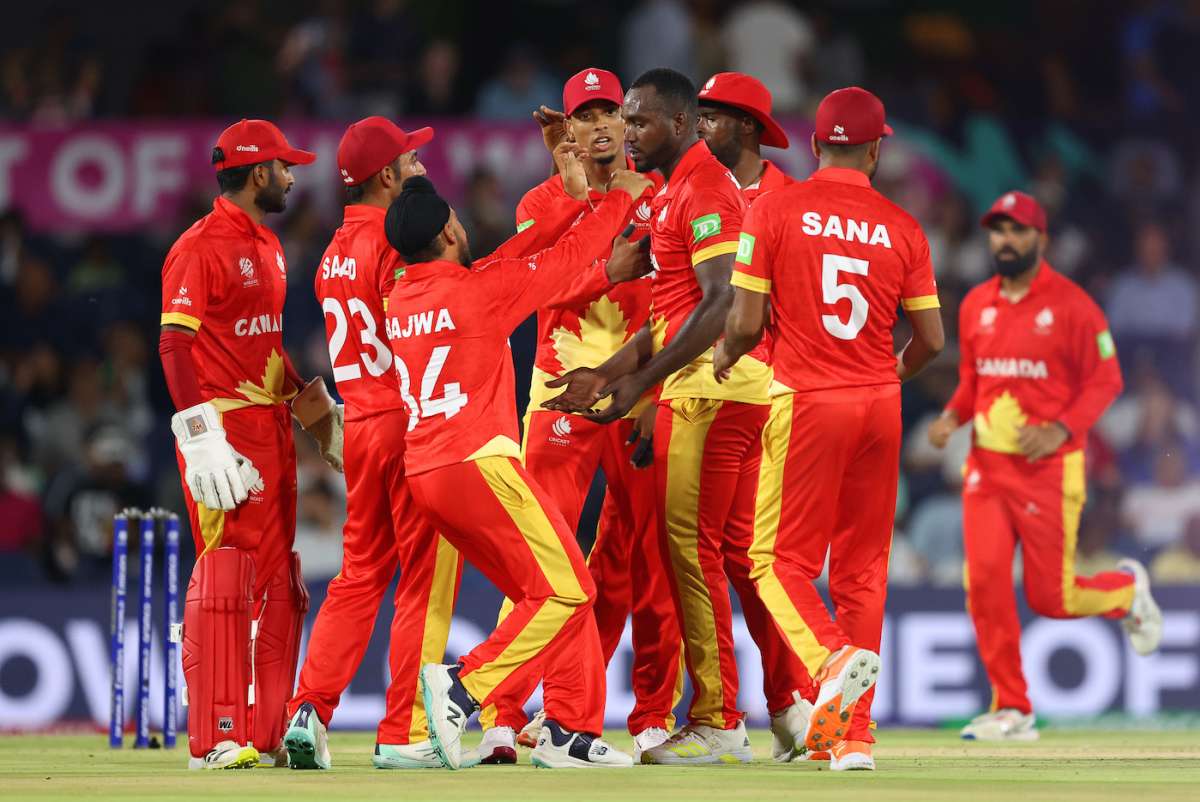
Photo Cred: ESPNcricinfo
The worst bowler of the game was Nikhil Dutta. His 19-run ninth over marked the beginning of the US blitzkrieg. He seemed to bounce back by taking a wicket and giving up six runs in his next over. However, he faltered in the over where the US sealed the deal, giving up 16 runs in four balls. In his over, Gordon appeared to have taken Gous’ wicket, but he had overstepped the bowling line. That resulted in a no-ball that granted Gous and the Americans a momentary reprieve before he perished three balls later. Dutta also had a chance to take Jones’ catch, but he missed his opportunity. Despite Heyliger’s stranglehold on the US, bowling 1/19 in three overs, he was not given a chance to finish his full quota. The Maple Leafers conceded 19 extras, accounting for the third-most runs accumulated for the US’ batting.
A Lot to Look Forward To!
The United States will need to maintain their impressive form to advance to the next round, as their competition will only get tougher. The Americans faced Pakistan today, Thursday, June 6th, in a thriller of a match. Group matches against India and Ireland are still ahead. However, this win against Canada was a significant start. It provided momentum for the American side, while the atmosphere of the game showed that cricket can continue to gain traction and grow in the United States. An exhilarating run chase exemplifies the kind of excitement cricket can bring.

Photo Cred: AP News (L- Jones, R- Movva)