

Wednesday, March 18, 2026
32.5 F
Louisville
Home Blog Page 238

“You’re hired!” SRA’s review of new NFL coaches

0
Freddie Kitchens image courtesy of USAToday

With football season well underway, here’s our review of this year’s roster of new NFL coaches.

Freddie Kitchens, Cleveland Browns

The Browns have a bright future, a young roster and cap moves to be made. They have their franchise quarterback, a breakout running back and a young defense. The only downside to this job? Heightened expectations. The good news for Kitchens is he starts with a clean slate. The head coach and coordinators who started this season for the Browns are gone. Kitchens will surely get some time as head coach.

Bruce Arians, Tampa Bay Buccaneers

Arians is a very good coach with a huge personality and is the right choice to whip Tampa Bay and Jameis Winston into shape. The Bucs needed an adult in the room and they’ll finally get one. Hiring a young upstart head coach wasn’t going to fit what the Bucs were looking for. The team went out and made an offer good enough to pull Arians out of the announcers’ booth and back onto the field.

Kliff Kingsbury, Arizona Cardinals

Kingsbury needs a veteran defensive coordinator because his defenses at Texas Tech were terrible. He should also find someone who has a bit of NFL head coaching experience to help him out. The college and professional games are different. We have to mention by law Kingsbury went 35-40 as Texas Tech.

Vic Fangio, Denver Broncos

The Broncos need a QB. Since they aren’t set up for immediate success, that means Fangio is immediately on the chopping block. Elway has been putting his bad roster decision at the feet of his coaches for some time now. He’s already gone through four coaches and Fangio is the fifth during his tenure.

Green Bay Packers, Matt LaFleur

Green Bay turned to a Great Lakes native to replace Mike McCarthy, snagging former Saginaw Valley State quarterback LaFleur after one underwhelming season as the Titans’ offensive coordinator. He didn’t do much for a Tennessee club, who scored fewer points and won fewer total games with him in the fold than it did in 2017.

Miami Dolphins, Brian Flores

Flores spent his entire coaching career in New England, starting in 2004 as a scouting assistant and moving up to the club’s linebackers coach. The former Boston College linebacker has played a key role in elevating talented players in Foxborough, turning unwanted players like Kyle Van Noy and J.C. Jackson into above-average starters and pushing Stephon Gilmore to his All-Pro potential.

New York Jets, Adam Gase

The Dolphins hired Gase in 2016 when “hot young offensive minds” were making splashes in coaching hires. They wanted him to turn Ryan Tannehill into a true franchise quarterback. Three seasons later, he’s now expected to turn Sam Darnold into that QB.

Bundling to Change the Future

Even with change, history repeats itself.  Consumers of content can see the tides of change.  They have been experiencing it at home and on their phones, tablets, and computers.  Students, experts, and practitioners alike have talked about and analyzed the advent of streaming, disruption, with more and more content availability. 

Bundling.  What is it?   Bundling used to be a practice of courtship in marriage.  Today, bundling is a courtship of content creators and distributors.  According to Wikipedia, bundling is “the selling of different items, typically of hardware or software, together as a package.”

As a practical matter, bundling is where a content platform like Roku or Amazon Fire Stick hosts other content providers and distributors applications for a flat rate or additional flat rate price.  Why does this sound familiar?  Well, not too long-ago cable and satellite carriers like AT&T or Spectrum and Dish would negotiate deals for content.  Now those carriers are platforms like Roku, Hulu, Amazon Fire Stick, and Netflix.  Oddly, or innovatively enough, the new streaming carriers are also the content creators. 

With the above, there are three things to watch closely as bundling partnerships grow:

1. Old Players become New Players

The idea that Disney-owned ABC is possibly getting back into negotiating for Fox’s NFL rights is yet another sign that history repeats itself.  As much as the new technology streamers have changed things, the existing players will continue to adapt to survive.  If ABC is successful in obtaining Fox’s NFL broadcast rights, would such a deal also include streaming and will consumers see that content on the new Disney+ platform or the ABC app via Amazon Fire Stick, Roku, or on Disney-majority owned Hulu?

2. Cooperation & Technology Advancements    

Will the streamers, distributors, content creators, and all parties involved continue the Golden Age of content availability or will the content accessibly fracture continue as Fox sells to Disney and traditional players get smarter about what consumers want by going solo in their solo distribution platforms?  As streaming technology advances, content will only become available more quickly and without disruption.  Technology will grow the availability and consumption of content here in the United States and abroad.  As analytics, data, and technology grow to help understand and influence consumer behavior, it is likely that American’s will enjoy Indian, African, Asian, and European content as much as American content is enjoyed overseas. 

3. Pricing Levels

In line with the question of cooperation between the creators, distributors, and streamers is the issue of pricing.  Will the cost of bundling increase to the level of what cable and satellite providers were charging prior to the explosion of streaming?  Will cable and satellite providers change to offer competitive pricing and use technology to reach more consumers?  AT&T purchasing TimeWarner in 2018 in an $85 billion merger is the most obvious demonstration of the aforementioned and an example of an old player becoming anew. 

Time will tell what bundling will do for and to consumer appetites.  Hopefully, it is one of increased access, cooperation, and competitive pricing, leaving the past behind where streamers do not model what once was. 

Moneymakers: Netflix, Hollywood Stars, Brands, & Sports Leagues

John Morgan/Flickr (CC BY 2.0) | Remix by Jason Reed (https://www.flickr.com/photos/aidanmorgan/4388525466)

Netflix hopes to sell more content in Europe and the discussion is between whether the streamer will disrupt and work with existing players or just disrupt.  Hollywood stars can make upwards of $200,000 for walking the red carpet through various brand endorsements.  Lastly, since the May 2018 United States Supreme Court decision in Murphy v. National Collegiate Athletic Association,  professional sports leagues and individual franchises (including the NBA, NFL, NHL, and MLB) have secured sponsorship deals with gambling houses, Caesars, MGM and William Hill.  The MLS is not far behind.

What do the above three stories in entertainment, media, and sports have in common?  All are opportunistic—looking to drive profit where it could not exist before.  Before Netflix’s disruption through advancing technology and a new business model, traditional studios, generally local to the area controlled the consumer content.  Before talent individuality made more readily available by social media, brands and stars saw the value in television marketing, but those relationships can be pushed much further now through platforms and less-studio control.  There was a time when sports leagues were against marriages between gambling, leagues, and franchises, now the ink on one deal cannot dry before the next deal is signed.

Changes in technology, the rule of law, and consumer appetites’ are the driving force to finding new revenue streams.  Much like the analytic departments in many of the professional sports franchise front offices, a market economist must find where the most need meets the highest profit margin.  Find the gap and fill it, then profit from it. 

With the above, there are three things consumers and industry participants should follow in the coming months and years. 

1. The Differences between Europe/the World and the United States

The Law, programs, and politics in Europe and around the world are far more regulatory and controlling in nature and practice.  Consumers and decision-makers at home love Netflix because it is an American company doing well in a capitalist market.  This is the American-way.  Overseas, not so much.  Chinese, European, and Middle East state regulation on content is just the start.  Unless foreign countries and regions have a direct benefit, which also costs more money, look to see more and more regulation controlling content, profit, and expansion.  China’s treatment of Google, Europe’s copyright and GDPR privacy laws and competition are high barriers to market entry and dominance.  Playing a team game might be best to succeed.   

2. Brands matter

Brands have always mattered.  Not front-page news there.  However, social media highlights a Hollywood stars’ individuality without the use of an expensive and potentially controlling intermediary (e.g., a studio or similar content producing company).  Social media makes promoting the brand easier with little to no cost, regulation, or barriers to entry (other than FTC and state consumer protection laws).  Entertainment and sports talent may now simply sign contracts to post endorsed content on their social media platforms for a specified amount (in dollars and in number of posts) and in duration (length of the deal).

3. Values always matter

Sports leagues will have to find a way to balance between completely standing against something to being an open sports book.  The Caesars, MGM, and William Hill sponsorship deals for naming rights, but not for gambling or fantasy sports, might have been the best compromise the leagues could come to.  On the one hand, it would be an unwise business-decision to leave sponsorship dollars on the table.  On the other hand, the leagues and franchises will have a harder time now guarding the dividing line in protecting the integrity of the game and its players.  Imagine the first gambling-gate saga to come, it becomes harder to pass the smell test when a league’s major sponsor is also the tool used to create the gambling-gate fallout. 

The light of the world

Charlie Waters

Twelve-year NFL veteran Charlie Waters says Clemson University Coach Dabo Sweeney has a luminous personality.

“He’s got that magical light that glows in him all the time,” Waters said.

In John 8:12 Jesus said, “I am the light of the world. Whoever follows me will never walk in darkness, but will have the light of light.” Amplified Bible (AMP)

As believers in Christ, we must maintain a credible and obvious witness in the world, a witness that shows us to be faithful, God-honoring, trustworthy, sincere, earnest, and honest in all that we do.

Also, we should always be ready to give an account of the hope that we have (1 Peter 3:15), for the gospel Light we have is not to be covered, but made obvious for all to see and benefit from, that they, too, may leave the darkness and come into the Light.

The greatest gift of all

When questioned about his outstanding work ethic, University of Kentucky basketball player Reid Travis responded, “I hate it when talent or skill is not put to use. I’d hate to look back and see that I wasted a gift.”

2 Corinthians 9:15 says, “Thanks be to God for his indescribable gift.”

Don’t ignore or waste God’s gift to you this CHRISTmas!

Answers in Time: The Players, the NCAA, and the Professional Sports Leagues

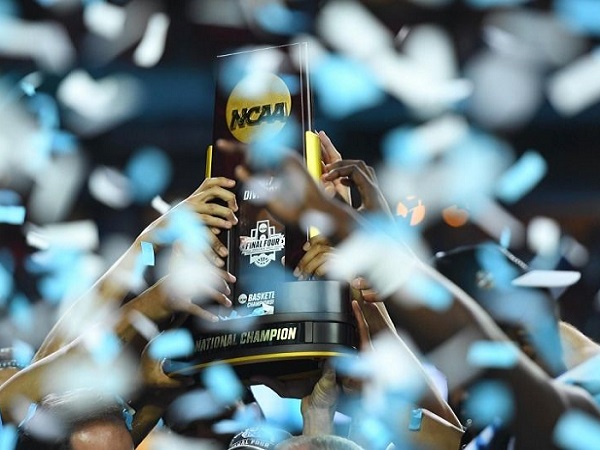
Photo Courtesy of the Associated Press

The debate between the players who play, the National Collegiate Athletic Association (NCAA) who govern the players and member institutions, and the professional sports leagues who draft and pay the players continues.  Namely, what is the best process for students who play a high school or collegiate sport to enter into the professional ranks.  Here are three solutions that if implemented simultaneously would help to provide a solution to the debate.

1. All Prospects have a Choice

The National Basketball Association (NBA) has changed its one-and-done rule, which means that prospects will be able to go pro sooner.  The NBA has simultaneously strengthened its G-League programs, but nearly all of its prospects still come from the NCAA or overseas.  The National Football League (NFL) does not have a minor league and nearly all of its prospects come from the NCAA.  However, the arrival of the XFL, AAF, and Pac Pro League, if successful, may provide prospects with the opportunity to play professional without having to go through the NCAA to get to the NFL. 

Major League Baseball (MLB), the National Hockey League (NHL), and Major League Soccer(MLS) all have established minor league systems and most of its players come through that path.  The point here is the freedom of choice.  The players with the biggest gripe against the professional sports leagues are those that require the players to enter the NCAA to give them a shot at the professional ranks, specifically the NFL and NBA.  By removing the requirement to go through the NCAA, while giving students who play  sports a choice, get an education and play a sport or go pro immediately, it at least allows the freedom of choice to decide one’s future. 

2. All Member Institutions must Give

The University of Oregon recently signed a second sponsor in Fanatics on top of its first sponsor, Nike.  The deal is for $25 million.  Many other universities have signed similar deals, while university sports conferences have signed massive television rights deals.  The NCAA has received unwarranted blame for not allowing student-athletes to play a professional sport immediately as it is the professional sports leagues who set the rules, not the NCAA.  That being said, the NCAA (through March Madness mostly), the member institutions (universities), their athletic conferences, and the Bowl Selection Committee have benefitted from the relationship and the rules. There is nothing wrong with making a profit and it should be encouraged, but those monies should be earmarked at least partially for student scholarships, community giving, university expansion (and not just sports facilities), as well as trust funds and 401k’s for students who play a sport while studying because it is those same students who provide the underlying value at least partially to the product consumers are watching on the field.   

3. All Leagues must Provide a Minor League

The MLB, NHL, and MLS all have established minor league systems that provide great entertainment to local communities and professional development opportunities for players to go pro.  This makes sense because each individual should have the freedom to choose between what career path he/she takes.  There is also an argument that has been made to increase the pay of minor league players, but at the least it is a choice the student-athlete makes, get an education and go pro or go through the minor leagues.  That choice does not currently exist with the NFL, but may soon with the introduction of new football leagues.  The NBA will soon offer a choice.  The MLB, NHL, and MLS already offer a choice.  

With freedom, giving, and opportunity, there may just be time for less debate and more solutions.

Robert Sarver to Phoenix: Take it or leave it

0
Image courtesy of USAToday

On Wednesday,  Phoenix Suns owner Robert Sarver threatened to move his NBA team to Seattle or Las Vegas.

Sarver’s  threat comes amidst an ongoing disagreement with the Phoenix City Council. The Suns’ owner is seeking $150 million in public money for renovating their current arena.

Many in the public prefer owners use their own money instead of public funds for stadium/arena improvements or buildings.  Some of the public backlash against Sarver stems from his management of the Suns.

The only time the Suns have played well was with Steve Nash and
Amar’e Stoudemire in the mid to late 2000’s. The team has played its home games since 1992 in Talking Stick Resort Arena in downtown Phoenix.

Even so, Sarver’s threat to move the team to Seattle and Las Vegas looms. The Sun’s would be allowed to move the team to some other city in 2022 if no new agreement can be reached.

In a new city in three years, the Sun’s look to be perennial playoff contenders with Devin Booker and DeAndre Ayton. After this year, the Phoenix Suns could draft Zion Williamson, who just might be a pleasant gift after an unexpectedly bad season plus create a new big three and public buzz around the Suns.

As of December 13, Sarver now states he’s planning on staying, which could be a power play. The relationship between the city and team is still on the rocks. 

This new comes after the Phoenix City Council decided to postpone its vote on the proposed $230 million renovations. The team would pay the remaining $80 million if Sarver gets the $150 million he seeks. The proposed deal would assure the Suns stay in downtown Phoenix until 2037.

Louisville cruises past Kent State

0
Image courtesy of USAToday

Kent State came to the Derby City Saturday to show their 8-1 record was legit coming into the game as they initially took it to the Louisville Cardinals inside the KFC Yum! Center. 

But, before the holidays began, Louisville gave their fans a blowout gift. Louisville head coach Chris Mack stressed inside-out ball to his players and was rewarded with open threes from drives and kicks from the inside.

“We beat a really good team today, I thought our guys played well,” Mack said.  “I feel really good about what our team accomplished today. Kudos to our guys for being strong with the ball and making the right decision, I think we’re getting better with getting the ball in the paint and making decisions from there.”

The Flashes of Kent State came out aggressively, breaking down the Cardinal’s defense. As Louisville’s defense adjusted, it forced Kent State to run their offense late in the shot clock, forcing tough shots. Kent State went from open mid-range and three-point shots to shooting under distress.

The defense also forced seven turnovers leading to fouls that the Cardinals turned into eight points.  Back-to-back three-pointers from Malik Williams  with under four minutes left broke the game open for the Cardinals to have a double-digit lead.

Louisville hot-shot 60% and 67% from three en-route to a 45-28 victory.  The Cardinal’s defense held the Flashes to 45% from the field and three.

Overall, the Flashes lost all the offensive flow they had during the first 10 minutes of the game. While Kent State couldn’t find their offense, Louisville found their stroke from three-point land which carried over from the first half. The final score was 83-70, closer than the score actually was.

The Cardinals shot 51 percent from the field and nine of 18 from behind the arc (a season-high 50 percent) while scoring 28 points in the paint with just ten turnovers. Cunningham shot five of six from the floor while pouring in a season-high 17 points. Dwayne Sutton scored 16 points and hit five of ten shots. Jordan Nwora finished with a double-double of 13 points and 10 rebounds.

Will Anyone Catch Netflix?

Image Courtesy of the Associated Press

Netflix-Paramount.  Apple-A24. Amazon-NFL.  AT&T-Time Warner.  NBCUniversal-Comcast-Sky.  Disney-21st Century FOX.  Nexstar-Tribune.  All of these deals were done for one purpose: to compete with the competition.

The deals of 2011-2015, 2016, and 2017 were not much different.  Like all roads lead to Rome, all deals lead to competing with the hope of dominating the competition. 

The question, will anyone catch Netflix, stems from the idea that Netflix was the first successful company to present Video-on-Demand (VOD) and streaming services.   Other companies have played catchup to their streaming dominance.  The question of continued streaming dominance arrives when competitors decide not to license film and television properties to Netflix and instead opt for their own streaming and broadcast services. 

However, this is not to say that the competition has fallen on hard times.  Apple and Amazon have approached and/or crossed the $1 trillion business valuation mark in 2018.  Disney, Comcast, and others have all spent and made billions of dollars in 2018.  By comparison, Disney-FOX and Comcast-Sky will spend a combined $43 billion in 2018 compared to $8 billion for original content at Netflix, and $12-13 billion for all content on the streamer.

On the other hand, are Netflix’s competitors too late to the dealmakers table?   Three reasons suggest they are not:

1. The international market has not been settled

For the American-based streamers, China is an untapped market.  India is growing and its people want more content.  Hulu is even looking at international expansion to scale its business.  The streamer(s) who are first and allowed to grow, providing both international and local content, will be very successful in new and growing markets.    

2. It depends on the timing of the expiring studio licensing contracts

The Netflix-Paramount deal was completed in response to the ever-growing audience appetite for content as well as the expiring studio content licensing contracts parked at Netflix.  92% of the content on Netflix’s streaming platform is the property or partial property of a company not named Netflix.  For example, if/when Disney-FOX, NBCUniversal, and Warner remove their content from the Netflix platform after expiring licensing deals to their own streaming platforms, it would account for nearly 20% of Netflix’s existing content.  Of course, all decreases or increases in the streaming market share depend on (1) when the licensing deals expire, (2) whether those same licensing deals are renewed, and (3) how any new platform performs compared to Netflix. 

3. Technology always wins: The newcomers must create something better or at least different

As opposed to the current sharing content model, one truly unfortunate result of more streamers with their own content is that those streamers will eventually become like the cable providers where only their content can be found on their own platform.  Netflix basically becomes the next NBC, ABC, FOX, or CBS.  History repeats itself except now the content provider is also the content deliverer.  The streamer who can deliver more content and do so faster than their competitors will win the day.  Lastly, the company that can bring all content to a platform is likely to dominate because the delivery of content, however that may be, is just as important as the substance of the content being delivered.    

It may not be a bad thing to have your content in more place than one if the licensor is getting paid for it.  The consumer and the economy always benefit with more options, not less.  The expansive availability of content also continues the golden age of content era that we are currently experiencing. 

Will anyone catch Netflix?  Disney-FOX, AT&T-Time Warner, NBCUniversal, and others may have something to say about it. 

Louisville pegs Scott Satterfield as football coach

0
Image courtesy of USA Today

The University of Louisville finally got their man for football as the Cards announced the hiring of Scott Satterfield from Appalachian State.

Satterfield replaces Bobby Petrino, who was fired Nov. 11 after leading the Cardinals on an abysmal, 2-8 record. Scott has spent each of the past six seasons as Appalachian State’s head coach. He compiled a 51–24 record as the Mountaineers head coach and has won ten or more games in three of the past four campaigns. Appalachian State has three, straight conference titles. He was named Sun Belt Coach of the Year this season.

At age 45, Satterfield is fairly young. The former Mountaineers quarterback began his coaching career at ASU as a wide receivers coach in 1998. Now that he’s in the Atlantic Coast Conference, 2019 will be rough as Louisville has lost recruits.

Additionally, the recruiting demands are different, as NFL talent is now expected. Talent identification is more precise. The media and alumni responsibilities are greater. The spotlight is hotter. This is a guy who’s worked all but three of his 21 seasons as a coach in Boone, North Carolina. He now has a national audience viewing him.

Even so, Satterfield possesses an excellent offensive mind. ASU was a top-20 offense in 2018 in points-per-game. Turning to defense, Appalachian State has ranked in the Top 25 in scoring defense the last four seasons.

Louisville is known for offense, but their defense has long been a problem (discounting the Charlie Strong Era). If Satterfield can bring that same success to Louisville, the Cardinals will return to the top of the ACC sooner than later.